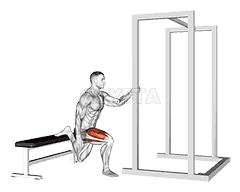
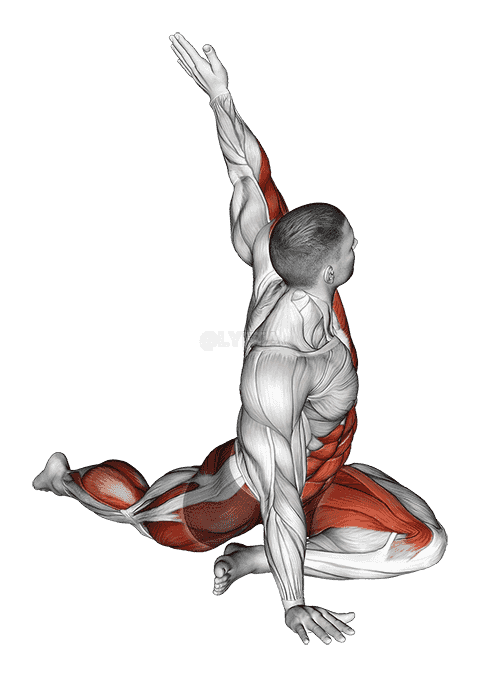
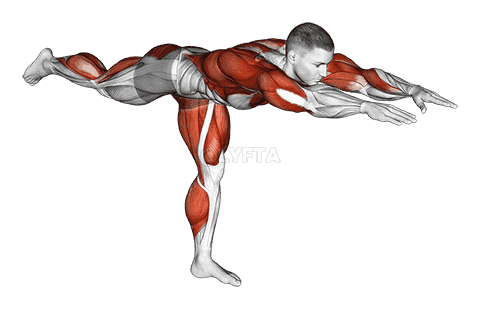
Static Lunge
Static Lunge demonstration
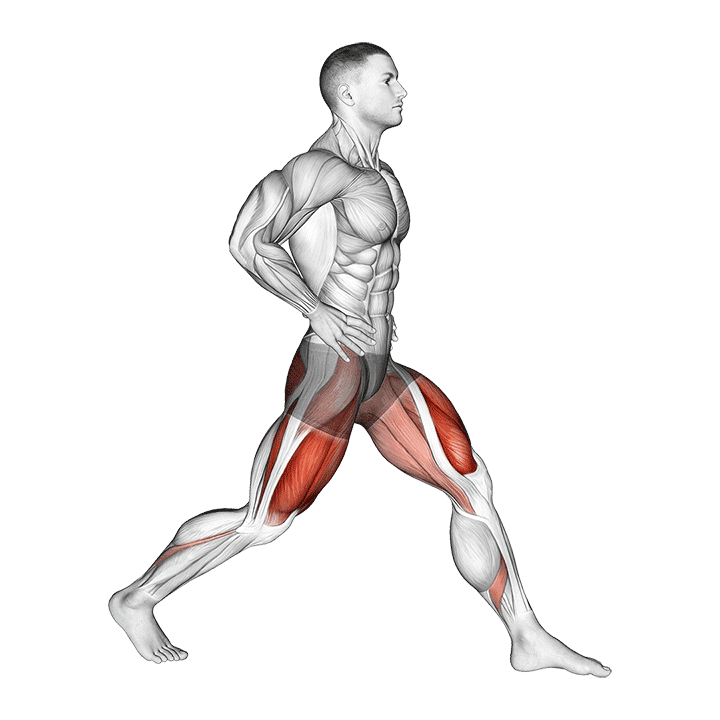
Performing the: A Step-by-Step Tutorial Static Lunge
- Take a large step forward with your right foot, keeping your left foot in place.
- Lower your body towards the ground by bending both knees to a 90-degree angle, ensuring your front knee is directly above your ankle and your back knee is hovering just off the floor.
- Hold this position for a few seconds to complete the static lunge.
- Push back up to your starting position, then repeat the movement with your left foot stepping forward.
Tips for Performing Static Lunge
- **Keep Your Back Straight**: Another common mistake people tend to make is slouching or leaning forward during a lunge. This can cause strain on your back. To avoid this, keep your back straight and your shoulders relaxed.
- **Stance**: The distance between your front and back foot is crucial. Too close and you won't get much of a workout, too far and you could strain your muscles. Your stance should be wide enough that when you lunge, your front thigh is parallel to the ground.
- **Controlled Movements**: Avoid rushing through your lunges. This can lead to improper form and potential injury. Instead, perform each lunge with slow, controlled movements. This will help you
Can beginners do the Static Lunge?
Yes, beginners can definitely perform the Static Lunge exercise. It's a great lower body exercise that targets your quadriceps, hamstrings, and glutes. It's important to start with a weight that's comfortable and to focus on maintaining proper form. As with any new exercise, beginners should start slow and gradually increase intensity as their strength and endurance improve.
What are common variations of the Static Lunge?
- Reverse Lunges: Instead of stepping forward, you step backward into a lunge.
- Lateral Lunges: This variation involves stepping to the side into a lunge, working the muscles from a different angle.
- Curtsy Lunges: This involves stepping your foot diagonally behind you and bending your knees as if doing a curtsy.
- Jumping Lunges: This is a more advanced variation where you jump to switch your feet in the air, landing into a lunge with the opposite foot forward.