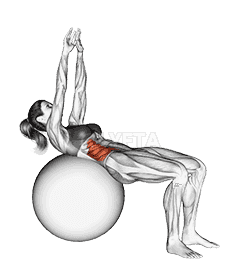
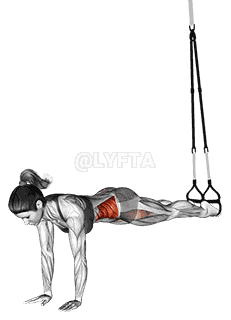
Side Bend
Side Bend demonstration
Performing the: A Step-by-Step Tutorial Side Bend
- Slowly raise your right hand above your head, keeping your arm straight and your palm facing left.
- While keeping your hips and feet firmly in place, gently bend your upper body to the left, stretching the right side of your body as you do so.
- Hold this position for a few seconds, feeling a stretch in your right side.
- Slowly return to the starting position and repeat the exercise on the left side by raising your left hand and bending to the right.
Tips for Performing Side Bend
- Control Your Movement: Side bends should be performed slowly and with control. Avoid jerky or fast movements, which can lead to injury. Instead, focus on smoothly bending to the side, hold for a moment, then return to the starting position.
- Keep Your Gaze Forward: Another common mistake is to look down or up while performing the side bend. Keep your gaze forward to maintain the alignment of your neck and spine.
- Engage Your Core: The side bend primarily targets the obliques, but it also works the entire core. Make sure to engage your core muscles throughout the exercise to maximize its benefits and protect your lower back.
- Don't Overstretch: While it's
Can beginners do the Side Bend?
Yes, beginners can definitely do the Side Bend exercise. It's a simple and effective exercise to improve flexibility and strengthen the core muscles. However, it's important for beginners to start slow and maintain proper form to prevent any potential injuries. It's also advisable to consult with a fitness professional or a physical therapist to ensure the exercises are being done correctly.
What are common variations of the Side Bend?
- Seated Side Bend: This is done while sitting on a chair or the floor, bending the upper body to one side and then the other, while keeping the lower body stationary.
- Side Bend with Dumbbell: This variation involves holding a dumbbell in one hand while bending to the side, adding extra resistance to the movement.
- Side Bend on Stability Ball: In this variation, you lie sideways on a stability ball with your feet against a wall for support, then bend at the waist to lower your torso towards the ball and then raise it again.
- Side Bend in Yoga (Parivrtta Janu Sirsasana): This is a more advanced variation, where you sit on the ground with one leg extended and the other bent, then bend to the side towards the