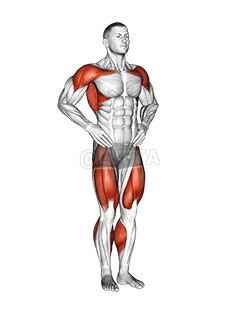
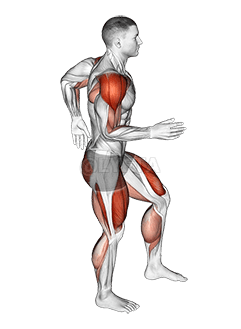
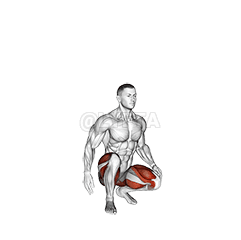
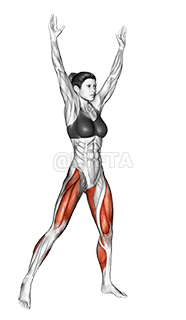
Scissor Jumps
Scissor Jumps demonstration
Watch the demo so setup and tempo are clear before you follow the step-by-step cues.
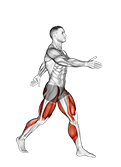
Performing the: A Step-by-Step Tutorial Scissor Jumps
Work through the cues in order so setup, bracing, and reps stay consistent before you add load.
- Jump up, and while in the air, cross your right leg over your left leg and your right arm over your left arm, as if you're making a scissor shape.
- Land softly on the ground with your right foot in front of your left and your right arm crossed over your left.
- Immediately jump up again, but this time cross your left leg over your right and your left arm over your right.
- Continue alternating sides with each jump for your desired number of repetitions, while maintaining a steady rhythm and keeping your core engaged throughout the exercise.
Tips for Performing Scissor Jumps
Form reminders that keep range of motion and control in check once the basic pattern feels stable.
- **Land Softly**: When you land, make sure to do so softly and on the balls of your feet to absorb the impact. Avoid landing flat-footed or on your heels, as this can cause unnecessary strain on your joints and may result in injury.
- **Controlled Movements**: Avoid rushing through the movements. Each jump should be controlled and deliberate. Rushing can lead to sloppy form, reduced effectiveness of the exercise, and increased risk of injury.
- **Breathing Technique**: Remember to
Can beginners do the Scissor Jumps?
A short framing note on whether this pattern suits newer lifters before you load it heavily.
Yes, beginners can do the Scissor Jumps exercise, but they should start with a modified version or lower intensity to avoid injury. It's important to ensure proper form and gradually increase intensity as strength and stamina improve. It's always a good idea to consult with a fitness professional or trainer when starting a new exercise routine.
What are common variations of the Scissor Jumps?
Compare these progressions when the main pattern is solid or you need a different stimulus with similar equipment.
- Weighted Scissor Jumps: By holding dumbbells in your hands while performing the scissor jumps, you can increase the intensity of the exercise and work on your upper body strength as well.
- Single-Leg Scissor Jumps: This variation requires you to perform the scissor jumps on one leg at a time, which enhances balance and coordination.
- Plyometric Scissor Jumps: This variation adds an explosive element to the traditional scissor jump, increasing the intensity and focusing on power and speed.
- Reverse Scissor Jumps: Instead of swapping your legs front and back, you swap them in the reverse direction, which targets different muscle groups and adds variety to your workout.
Related Exercises
Similar library demos that share muscle or equipment focus so you can compare form cues and programming options.