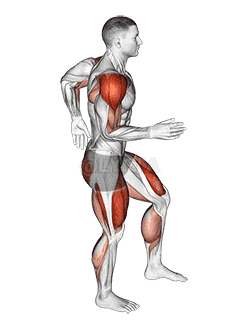
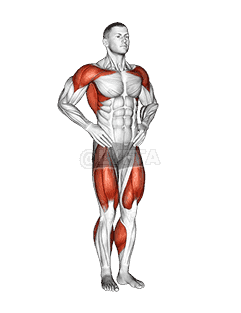
Duck Walk
Duck Walk demonstration
_Cardio_small.png&w=3840&q=75)
Performing the: A Step-by-Step Tutorial Duck Walk
- Lean slightly forward and extend your arms out in front of you for balance.
- Begin to walk forward while maintaining the squat position, moving one foot in front of the other.
- Keep your back as straight as possible and your knees over your toes as you walk.
- Continue this movement for a predetermined distance or time, then slowly rise back up to a standing position to complete the exercise.
Tips for Performing Duck Walk
- Proper Form: The most common mistake is incorrect form. Start in a squat position with your feet shoulder-width apart. Keep your chest up, back straight, and your weight in your heels. As you walk forward, try to keep your hips low, at the same level all the time. Avoid the tendency to rise up as you step forward.
- Take Small Steps: A common mistake is taking large steps, which can strain your knees. Instead, take small, slow steps, keeping your thighs parallel to the floor. This can help you maintain balance and control while also working your muscles effectively.
- Avoid Knee Pain: If you feel pain in your knees while doing the Duck Walk, it might be
Can beginners do the Duck Walk?
Yes, beginners can do the Duck Walk exercise. However, it's important to note that it requires a certain level of strength, flexibility, and balance. Therefore, beginners should start slow, maintain proper form, and gradually increase intensity as their fitness levels improve. It's always advisable to consult with a fitness professional or physical therapist to ensure you're doing the exercise correctly and to avoid injury.
What are common variations of the Duck Walk?
- The "Lateral Duck Walk" is a variation where you move sideways instead of forward, which can help improve lateral movement and agility.
- The "Weighted Duck Walk" is a more challenging version where you carry weights, such as a kettlebell or dumbbell, while performing the walk.
- The "Reverse Duck Walk" involves moving backward instead of forward, which can help improve balance and coordination.
- The "Duck Walk with Jump" adds a jumping element at the end of each walk cycle, increasing the intensity and adding a cardio component to the exercise.