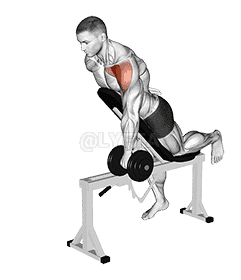
Dumbbell One Arm Lateral Raise
Dumbbell One Arm Lateral Raise demonstration
_Shoulders_small.png&w=3840&q=75)
Performing the: A Step-by-Step Tutorial Dumbbell One Arm Lateral Raise
- Keeping your torso stationary, lift the dumbbell to your side with a slight bend on your elbow and hands slightly tilted forward as if pouring water in a glass.
- Continue to lift the weight until your arm is parallel with the floor, then hold the contraction at the top for a moment.
- Slowly lower the dumbbell back down to the starting position as you breathe in.
- Repeat for the recommended amount of repetitions and then switch arms.
Tips for Performing Dumbbell One Arm Lateral Raise
- Control Your Movements: One common mistake when performing the Dumbbell One Arm Lateral Raise is to use momentum to lift the weight. Instead, focus on lifting the dumbbell slowly and deliberately, pausing at the top of the movement before lowering it back down. This control will ensure you're effectively targeting the intended muscles and not relying on momentum to do the work.
- Keep Your Arm Slightly Bent: While it might be tempting to fully extend your arm as you lift the dumbbell, keeping a slight bend in your elbow can help protect your joints from potential injury. Remember to lift the dumbbell out and up to shoulder height, keeping the elbow slightly bent throughout the movement
Can beginners do the Dumbbell One Arm Lateral Raise?
Yes, beginners can do the Dumbbell One Arm Lateral Raise exercise. However, it is important for beginners to start with a light weight to ensure they are using the correct form and to prevent injury. As they get stronger and more comfortable with the exercise, they can gradually increase the weight. It's also recommended to have a trainer or an experienced person guide through the process to ensure correct posture and technique.
What are common variations of the Dumbbell One Arm Lateral Raise?
- Seated Dumbbell Lateral Raise: This version is done while sitting down, which helps to isolate the shoulder muscles by minimizing the use of the lower body and back.
- Dumbbell Front Lateral Raise: Instead of lifting the dumbbell to the side, you lift it to the front, which engages the anterior deltoids more.
- Bent Over Dumbbell Lateral Raise: In this variation, you bend over at the waist and lift the dumbbell to the side, which targets the rear deltoids.
- Dumbbell Lateral Raise with Supination: While performing the regular lateral raise, you rotate your wrists so that your palms face upwards at the top of the movement, which engages the biceps and forearm muscles in addition to the shoulder muscles.