Transverse Step Up
Transverse Step Up demonstration
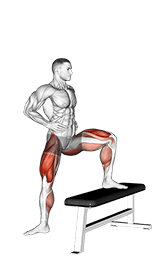
Performing the: A Step-by-Step Tutorial Transverse Step Up
- Push through the heel of your left foot to lift your body up until both legs are straight and you're standing on the step.
- Pause for a moment at the top, keeping your balance, then slowly lower your right foot back down to the ground.
- Ensure your left foot remains on the step throughout the entire exercise.
- Repeat the process for your desired number of reps, then switch sides so that your right foot is on the step and your left foot is on the ground.
Tips for Performing Transverse Step Up
- Control Your Movement: As with any exercise, control is key. When you step up, make sure to do so in a slow, controlled motion. This will help to engage the correct muscles and reduce the risk of injury. A common mistake is to rush the movement, which can lead to instability and potential injury.
- Engage Your Core: To get the most out of the Transverse Step Up, make sure to engage your core throughout the entire
Can beginners do the Transverse Step Up?
Yes, beginners can do the Transverse Step Up exercise. It's a great exercise to work on lower body strength and stability. However, like any other exercise, it's important for beginners to start with light intensity and gradually increase as they get stronger. It's also crucial to maintain proper form to avoid injury. If unsure, it's always a good idea to consult with a fitness professional or physical therapist.
What are common variations of the Transverse Step Up?
- The Weighted Transverse Step Up involves holding a dumbbell or kettlebell in one or both hands while performing the exercise, increasing the difficulty.
- The Transverse Step Up with Resistance Band involves placing a resistance band around the ankles or thighs to add an extra level of challenge to the movement.
- The Transverse Step Up Jump incorporates a jump at the top of the step, adding a plyometric component to the exercise.
- The Transverse Step Up with Side Kick involves performing a side kick with the non-stepping leg at the top of the step, focusing on the abductors and glutes.