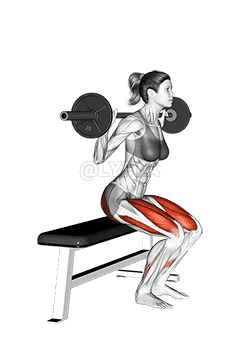
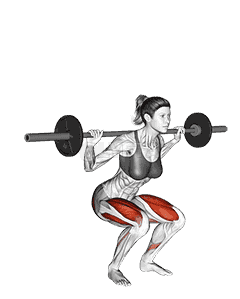
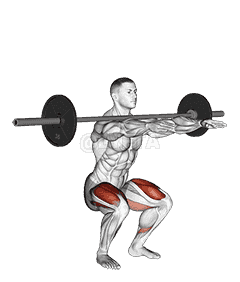
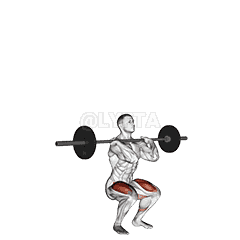
Barbell Rear Lunge
Barbell Rear Lunge demonstration
Performing the: A Step-by-Step Tutorial Barbell Rear Lunge
- Take a step back with your right foot, lowering your body into a lunge position. Your front knee should be bent at a 90-degree angle and your back knee should nearly touch the floor.
- Push through your front heel to return to the starting position, keeping your back straight and the barbell steady.
- Repeat the movement with your left leg stepping back this time.
- Continue alternating legs for the desired number of repetitions or time.
Tips for Performing Barbell Rear Lunge
- Control Your Movements: Avoid rushing through the movement or using momentum to swing back up from the lunge. Instead, focus on controlled, smooth motions. Lower your body slowly and push back up to the starting position with power. This will help engage the correct muscles and prevent injuries.
- Keep Your Chest Up: A common mistake is to lean forward or let your upper body sag during the lunge. Always keep your chest up and shoulders back. This will help maintain balance and prevent strain on your lower back.
- Use the Right Weight: If you're new
Can beginners do the Barbell Rear Lunge?
Yes, beginners can do the Barbell Rear Lunge exercise, but it's important to start with a light weight to ensure proper form and prevent injury. It's also beneficial to have a trainer or experienced individual demonstrate the exercise first to ensure the correct technique is being used. As with any new exercise, beginners should start slow and gradually increase weight as their strength and confidence improve.
What are common variations of the Barbell Rear Lunge?
- Kettlebell Rear Lunge: This variation replaces the barbell with a kettlebell, which can be held in one or both hands, adding an extra challenge to your balance and coordination.
- Bodyweight Rear Lunge: This variation doesn't require any equipment, making it a good option for beginners or for those who want to focus on form and balance.
- Walking Rear Lunge: This dynamic variation involves stepping backward into a lunge, then pushing off with the rear foot to bring it forward into the next step.
- Rear Lunge with a Twist: This variation adds a torso twist to the lunge, which engages the core and helps improve balance and coordination.