Assisted Chin-up
Assisted Chin-up demonstration
Watch the demo so setup and tempo are clear before you follow the step-by-step cues.

Performing the: A Step-by-Step Tutorial Assisted Chin-up
Work through the cues in order so setup, bracing, and reps stay consistent before you add load.
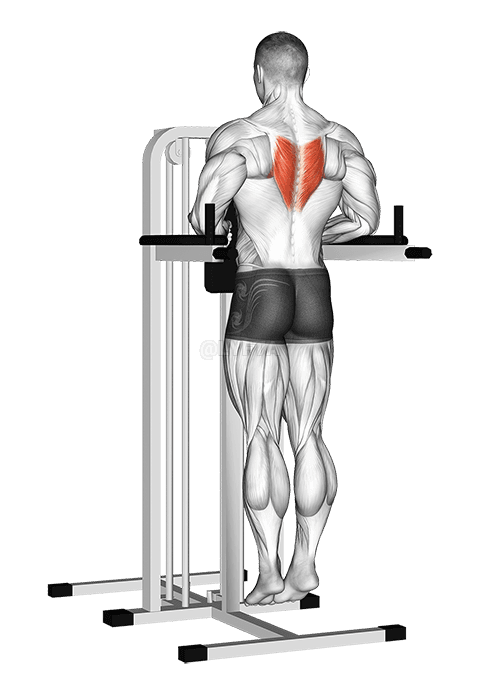
- Stand on the platform and grip the handles of the machine with your palms facing towards you. Your hands should be shoulder-width apart.
- Step off the platform and hang at arm's length. This is your starting position.
- Pull your body upwards towards the handles until your chin is at or above the level of the handles, keeping your elbows close to your body.
- Slowly lower your body back down to the starting position, allowing your arms to fully extend. Repeat this process for the desired number of repetitions.
Tips for Performing Assisted Chin-up
Form reminders that keep range of motion and control in check once the basic pattern feels stable.
- Engage Your Muscles: Engage your core and squeeze your shoulder blades together as you pull yourself up. This will ensure that you're using your back and arm muscles effectively, rather than relying solely on your biceps. A common mistake is not fully engaging these muscles, which can limit the effectiveness of the exercise and increase the risk of injury.
- Full Range of Motion: Ensure that you're using a full range of motion during the exercise. Start from a full hang with your arms fully extended, and pull yourself up until your
Can beginners do the Assisted Chin-up?
A short framing note on whether this pattern suits newer lifters before you load it heavily.
Yes, beginners can do the Assisted Chin-up exercise. This exercise is a great way for beginners to build strength and work their way up to doing unassisted chin-ups. An assisted chin-up machine or resistance bands can be used to help support some of your body weight, making the exercise easier. It's important to use correct form and gradually increase the intensity as your strength improves. As with any exercise, it's recommended to start with a trainer or fitness professional to ensure you are doing the exercise correctly and safely.
What are common variations of the Assisted Chin-up?
Compare these progressions when the main pattern is solid or you need a different stimulus with similar equipment.
- The Jumping Chin-up is another variation where you use a jumping motion from the ground to give yourself a boost to reach the top of the movement.
- The Negative Chin-up focuses on the lowering phase of the chin-up, where you start at the top and slowly lower yourself down.
- The Isometric Hold Chin-up involves holding yourself in the top position of the chin-up for a set period of time to increase strength and endurance.
- The Inverted Row is a horizontal version of the chin-up, performed on a bar set at waist height, where you pull your chest up to the bar from a lying position.
Related Exercises
Similar library demos that share muscle or equipment focus so you can compare form cues and programming options.