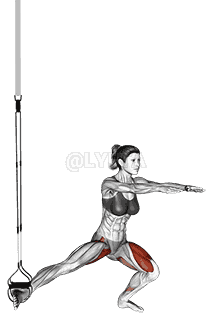
Suspension Side Lunge
Suspension Side Lunge demonstration
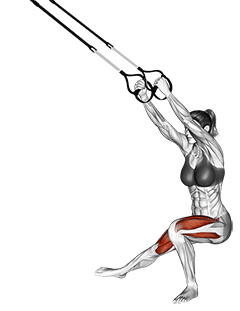
Performing the: A Step-by-Step Tutorial Suspension Side Lunge
- Step out to the side with your right foot, bending your right knee into a lunge while keeping your left leg straight.
- Push your hips back and lower your body as far as you can, keeping the suspension trainer taut.
- Push through your right foot to return to the standing position, maintaining control of the suspension trainer as you do so.
- Repeat the exercise on the other side, stepping out with your left foot and keeping your right leg straight.
Tips for Performing Suspension Side Lunge
- Proper Form: As you lunge to the side, keep your chest lifted, back straight, and your core engaged. Avoid rounding your back or leaning too far forward, as this can lead to injury. The knee of your lunging leg should be bent at a 90-degree angle, and your other leg should be straight.
- Controlled Movement: Make sure your movements are controlled and steady. Avoid rushing through the exercise or using momentum to complete the movement. This reduces the effectiveness of the exercise and increases the risk of injury.
- Keep Knees in Line: One common mistake is letting the knee of the lunging leg cave inwards or extend past the toes. Always keep your knee in
Can beginners do the Suspension Side Lunge?
Yes, beginners can perform the Suspension Side Lunge exercise. However, it's important to start with a lighter weight or even just body weight to ensure proper form and prevent injury. It's also beneficial to have a fitness trainer or an experienced individual guide them initially. This exercise requires balance and coordination, so beginners should proceed with caution.
What are common variations of the Suspension Side Lunge?
- Suspension Side Lunge with a Twist: In this variation, you add a torso twist at the bottom of the lunge, which helps to engage your core and improve your flexibility.
- Jumping Suspension Side Lunge: This is a plyometric variation where you add a jump as you come up from the lunge, increasing the cardiovascular intensity and working on power.
- Suspension Side Lunge with a Reach: This is done by reaching your arms overhead as you lunge to the side, adding an additional challenge for your balance and coordination.
- Weighted Suspension Side Lunge: In this variation, you hold a dumbbell or kettlebell in your hands to add extra resistance and increase the difficulty of the exercise.