Suspension Abduction Lunge
Suspension Abduction Lunge demonstration
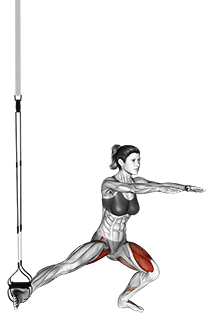
Performing the: A Step-by-Step Tutorial Suspension Abduction Lunge
- Step back with your right foot into a lunge position, keeping your left foot planted firmly in front and your body upright.
- As you lower into the lunge, move your arms out to the sides in an abduction movement, stretching the suspension straps and engaging your core.
- Push through your left foot to rise back up to the starting position, bringing your arms back together in front of you.
- Repeat the movement with your left foot stepping back and continue to alternate legs for the desired number of repetitions.
Tips for Performing Suspension Abduction Lunge
- **Engage Your Core**: To maintain balance during this exercise, it's crucial to keep your core engaged. This will not only help you stay stable but also maximize the effectiveness of the exercise by working your abdominal muscles.
- **Controlled Movements**: Avoid rushing through the movement. Instead, keep your movements slow and controlled to ensure you're working the targeted muscles and not relying on momentum.
- **Proper Alignment**: Keep your back straight and avoid leaning forward or to the side. Leaning can put unnecessary strain on your back and neck, leading to potential injuries. 5
Can beginners do the Suspension Abduction Lunge?
Yes, beginners can do the Suspension Abduction Lunge exercise. However, it's important to note that this is a more advanced exercise and may require some strength, balance, and coordination. Beginners should start with a lighter weight or even body weight, and focus on mastering the form and technique before adding more weight or complexity. It's also a good idea to have a trainer or experienced person supervise to ensure the exercise is being done correctly and safely.
What are common variations of the Suspension Abduction Lunge?
- The Suspension Abduction Lunge with Pulse: This version involves adding a small pulsing motion at the bottom of the lunge, which helps to increase muscle endurance and control.
- The Suspension Abduction Lunge with Twist: This variation incorporates a twist at the bottom of the lunge, which engages the core muscles and improves balance.
- The Suspension Abduction Lunge with Jump: In this version, you add a jump when you come up from the lunge, which increases the cardiovascular intensity and targets the fast-twitch muscle fibers.
- The Suspension Abduction Lunge with Knee Lift: This variation involves lifting the knee of the back leg as you stand up from the lunge, which challenges balance and strengthens the hip flexors.