Standing W-raise
Standing W-raise demonstration
Watch the demo so setup and tempo are clear before you follow the step-by-step cues.
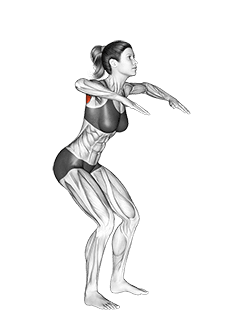
Performing the: A Step-by-Step Tutorial Standing W-raise
Work through the cues in order so setup, bracing, and reps stay consistent before you add load.
- Bend your elbows to a 90-degree angle with your palms facing forward and your arms forming a "W" shape.
- Slowly lift the dumbbells by extending your arms upwards until they are fully extended and parallel to the floor.
- Hold this position for a few seconds, focusing on squeezing your shoulder blades together.
- Lower the dumbbells back to the starting position in a controlled manner, maintaining the "W" shape with your arms. Repeat this exercise for the desired number of repetitions.
Tips for Performing Standing W-raise
Form reminders that keep range of motion and control in check once the basic pattern feels stable.
- Controlled Movement: One common mistake is performing the exercise too quickly. The key to getting the most out of the W-raise is to perform the movement slowly and with control. This will ensure you are using your muscles, not momentum, to lift the weights.
- Correct Weight: Choose a weight that is challenging but allows you to maintain proper form. If the weight is too heavy, you may strain your muscles or compromise your form. If it's too light, you won't effectively work the targeted muscles.
- Breathing: Breathe out as you lift the weights and breathe in as you lower
Can beginners do the Standing W-raise?
A short framing note on whether this pattern suits newer lifters before you load it heavily.
Yes, beginners can do the Standing W-raise exercise. It's a simple and effective exercise that primarily targets the shoulders and upper back. However, as with all exercises, it's important to start with light weights and focus on proper form to prevent injury. It may also be beneficial for beginners to have a trainer or experienced exerciser supervise at first to ensure the exercise is being done correctly.
What are common variations of the Standing W-raise?
Compare these progressions when the main pattern is solid or you need a different stimulus with similar equipment.
- The Incline W-Raise: This version is done on an incline bench, which changes the angle of the exercise and targets different muscles in the shoulders and upper back.
- The W-Raise with Resistance Bands: This variation uses resistance bands instead of dumbbells, providing a different type of resistance that can help improve muscle endurance and flexibility.
- The Single-Arm W-Raise: This version is performed one arm at a time, which can help identify and correct any imbalances in strength or flexibility between the two sides of the body.
- The W-Raise with Stability Ball: This variation involves performing the exercise while seated on a stability ball, which can help improve core strength and balance while also working the upper body.
Related Exercises
Similar library demos that share muscle or equipment focus so you can compare form cues and programming options.