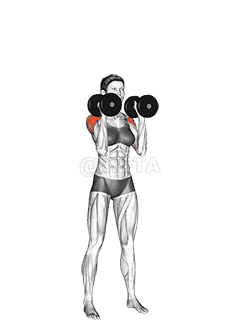
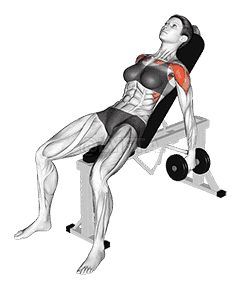
Dumbbell Rear Delt Raise
Dumbbell Rear Delt Raise demonstration
_Shoulders_small.png&w=3840&q=75)
Performing the: A Step-by-Step Tutorial Dumbbell Rear Delt Raise
- Bend slightly at your hips and knees, maintaining a straight back, and lean forward until your torso is nearly parallel to the floor.
- Keeping your elbows slightly bent, raise the dumbbells out to the sides until they are level with your shoulders, ensuring you are using your back muscles to lift the weights and not your arms.
- Hold this position for a second, feeling the contraction in your rear deltoids.
- Lower the dumbbells back to the starting position in a controlled manner to complete one repetition. Repeat this for the desired number of sets and repetitions.
Tips for Performing Dumbbell Rear Delt Raise
- **Controlled Movement**: Avoid swinging the weights or using momentum to lift. Instead, use a slow, controlled movement to raise and lower the dumbbells. This ensures you are working the right muscles and reduces the risk of injury.
- **Right Weight**: Don't use weights that are too heavy, as this can lead to poor form and potential injury. Start with lighter weights and gradually increase as your strength improves.
- **Keep Elbows Slightly Bent**: It's important to keep a slight bend in your elbows throughout the exercise. This helps to protect your joints and ensures that the focus of the exercise remains on your rear deltoids. 5
Can beginners do the Dumbbell Rear Delt Raise?
Yes, beginners can definitely do the Dumbbell Rear Delt Raise exercise. However, it's important to start with a lighter weight to ensure proper form and to avoid injury. It's also beneficial to have a personal trainer or experienced individual demonstrate the exercise first to ensure correct technique.
What are common variations of the Dumbbell Rear Delt Raise?
- Incline Bench Rear Delt Raise: In this variation, you lie face down on an incline bench which allows for a greater range of motion and targets the rear deltoids from a different angle.
- Bent Over Rear Delt Raise: This version requires you to bend over at the waist, either standing or sitting, and raise the dumbbells to the side, which can help to engage your core and lower back muscles.
- Single Arm Rear Delt Raise: This variation is performed one arm at a time, which can help to improve muscle imbalances and increase focus on the movement.
- Standing Rear Delt Raise with Resistance Bands: Instead of using dumbbells, this variation uses resistance bands which can provide a different type of resistance and help to improve muscle endurance.