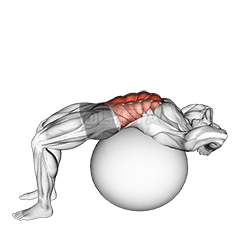
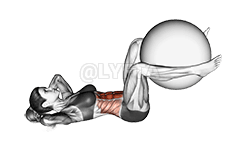
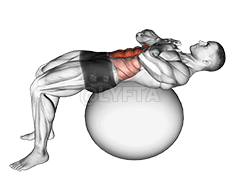
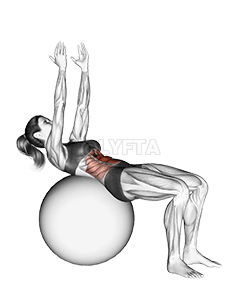
Crunch (Stability ball)
Crunch demonstration
Watch the demo so setup and tempo are clear before you follow the step-by-step cues.
Performing the: A Step-by-Step Tutorial Crunch
Work through the cues in order so setup, bracing, and reps stay consistent before you add load.
- Place your hands behind your head, lightly supporting it with your fingers, and keep your elbows out to the sides.
- Engage your core and lift your upper body, curling your shoulders towards your pelvis while keeping your lower back on the floor.
- Pause at the peak of the crunch for a moment, then slowly lower yourself back down to the starting position.
- Repeat this movement for your desired number of repetitions, ensuring to maintain controlled and steady breathing throughout.
Tips for Performing Crunch
Form reminders that keep range of motion and control in check once the basic pattern feels stable.
- **Focus on Your Core**: When performing a crunch, make sure you're using your abdominal muscles to lift your upper body off the floor, not your neck or shoulders. A common mistake is to jerk the head and neck up, which can lead to injury. Instead, focus on contracting your abdominal muscles and lifting your shoulder blades off the ground.
- **Controlled Movement**: Make sure your movements are slow and controlled. Avoid the temptation to use momentum to lift your body. This not only reduces the effectiveness of the exercise but can also lead to injury.
Can beginners do the Crunch?
A short framing note on whether this pattern suits newer lifters before you load it heavily.
Yes, beginners can definitely do the crunch exercise. It's a basic abdominal exercise that targets the abs and obliques. However, it's important to ensure proper form to avoid any potential back or neck injury. Here are basic steps: 1. Lie down on your back. Plant your feet on the floor,
What are common variations of the Crunch?
Compare these progressions when the main pattern is solid or you need a different stimulus with similar equipment.
- Bicycle Crunch: In this version, you alternate bringing your elbow to the opposite knee, mimicking a cycling motion that works both the upper and lower abs.
- Standing Crunch: This variation is performed standing up and involves lifting one knee at a time towards the chest, targeting the lower abs and improving balance.
- Cross-body Crunch: This involves bringing your elbow to the opposite knee while lying on your back, which targets the oblique muscles.
- Long Arm Crunch: This variation involves extending your arms straight behind you while performing a regular crunch, making the move more challenging and targeting the upper abs.
Related Exercises
Similar library demos that share muscle or equipment focus so you can compare form cues and programming options.