Cable Twist
Cable Twist demonstration
Watch the demo so setup and tempo are clear before you follow the step-by-step cues.
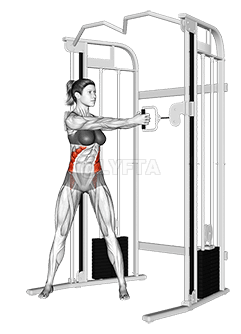
Performing the: A Step-by-Step Tutorial Cable Twist
Work through the cues in order so setup, bracing, and reps stay consistent before you add load.
- Grasp the cable handle with both hands, keeping your arms fully extended and your body in a straight line.
- Engage your core and slowly rotate your torso away from the machine, pulling the cable across your body while keeping your arms straight.
- Hold the position for a moment, feeling the tension in your oblique muscles.
- Slowly return to the starting position and repeat the movement for your desired number of repetitions before switching to the other side.
Tips for Performing Cable Twist
Form reminders that keep range of motion and control in check once the basic pattern feels stable.
- **Controlled Movements**: The key to the cable twist is to perform the exercise with controlled, deliberate movements. Avoid jerking or using momentum to twist the cable, as this can lead to muscle strain or injury. Instead, focus on using your core muscles to power the movement.
- **Right Weight Selection**: A common mistake is using too much weight. This can lead to improper form and potential injury. Start with a lighter weight until you're comfortable with the movement. As you get stronger, you can gradually increase the weight.
- **Full Range of Motion**: To get the most out of the cable twist, it's important to use a full range
Can beginners do the Cable Twist?
A short framing note on whether this pattern suits newer lifters before you load it heavily.
Yes, beginners can do the Cable Twist exercise. However, it's important to use a lighter weight to start with and focus on form. This exercise is great for working the core muscles, especially the obliques. It's also beneficial to have a trainer or experienced gym-goer demonstrate the proper technique to ensure safety and effectiveness.
What are common variations of the Cable Twist?
Compare these progressions when the main pattern is solid or you need a different stimulus with similar equipment.
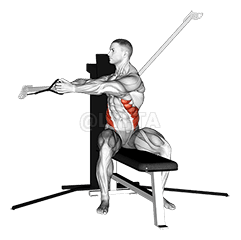
- The Seated Cable Twist: In this variation, you are seated on a gym bench while you perform the twisting motion.
- The Single-Arm Cable Twist: This variation of the Cable Twist involves using only one arm at a time, increasing the intensity and focus on individual oblique muscles.
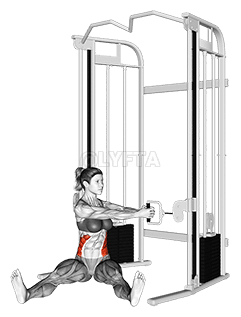
- The Cable Russian Twist: This is a variation where you sit on the floor, legs extended, and twist your torso from side to side while holding the cable handle.
- The Cable Woodchop: This variation involves a diagonal movement, mimicking the action of chopping wood, which engages both the obliques and other core muscles.
Related Exercises
Similar library demos that share muscle or equipment focus so you can compare form cues and programming options.