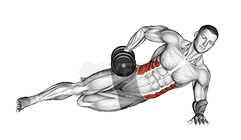
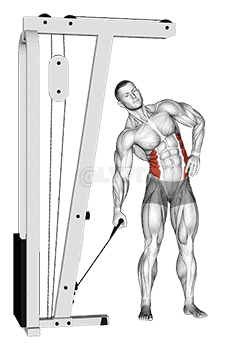
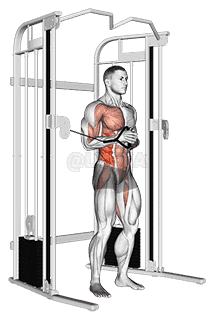
Dumbbell Side Bend
Dumbbell Side Bend demonstration
Performing the: A Step-by-Step Tutorial Dumbbell Side Bend
- Keep your back straight, your head up, and your other hand on your waist.
- Bend only at your waist to the side as far as possible, but make sure to keep your back straight.
- Hold for a moment at the furthest point, then return to the starting position.
- Repeat the exercise for the recommended amount of repetitions, then switch sides to ensure an even workout for both sides of your body.
Tips for Performing Dumbbell Side Bend
- **Controlled Movements**: Avoid fast, jerky movements. Instead, make sure to move slowly and deliberately, focusing on the muscles you are working. This ensures that you are not using momentum to lift the dumbbell, which can result in ineffective workouts and potential injuries.
- **Even Distribution**: When doing the Dumbbell Side Bend, it's common for people to only perform the exercise on one side. However, it's crucial to work both sides evenly to maintain balance and symmetry in your muscle development.
- **Right Weight**: Use a weight that is challenging but allows you to perform the exercise with proper form. Using a dumbbell that is too heavy can cause you to compromise your form and could lead to injury.
- **Breathing
Can beginners do the Dumbbell Side Bend?
Yes, beginners can do the Dumbbell Side Bend exercise. This exercise is relatively simple and can be easily performed by people at all fitness levels. It's important to start with a weight that is comfortable and won't strain the muscles. As with any exercise, it's crucial to maintain proper form to prevent injury. The user should stand up straight, hold the dumbbell in one hand, and then bend at the waist to the side. They should then return to the upright position and repeat the movement. It's a great exercise for strengthening the oblique muscles.
What are common variations of the Dumbbell Side Bend?
- Seated Dumbbell Side Bend: Instead of standing, this exercise is performed while sitting on a bench, which can help to isolate the oblique muscles more effectively.
- Dumbbell Side Bend with Twist: This variation involves twisting your torso towards the side you're bending to, which can engage both your obliques and your lower back.
- Dumbbell Side Bend with Overhead Reach: In this variation, you would reach the dumbbell overhead as you bend to the side, which can help to stretch and engage your latissimus dorsi (back muscles).
- Dumbbell Side Bend on Stability Ball: Performing a dumbbell side bend while sitting or lying on a stability ball adds an extra challenge to your balance and core stability.