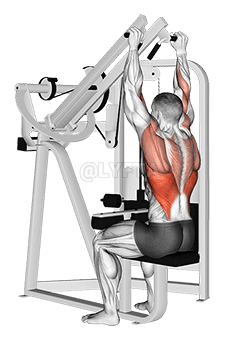
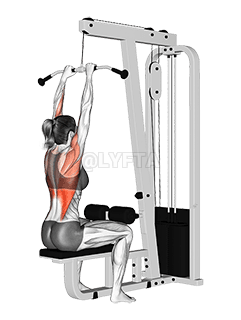
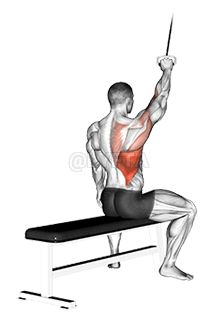
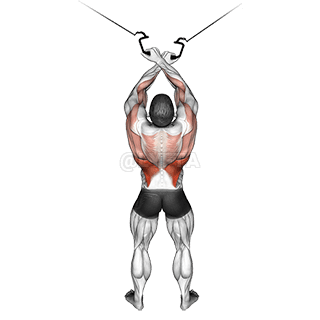
Weighted Pull-Up
Weighted Pull-Up demonstration
Watch the demo so setup and tempo are clear before you follow the step-by-step cues.
Performing the: A Step-by-Step Tutorial Weighted Pull-Up
Work through the cues in order so setup, bracing, and reps stay consistent before you add load.
- Stand beneath a pull-up bar, reach up and grip the bar with your hands slightly wider than shoulder-width apart and palms facing away from you.
- Pull your body upwards until your chin is above the bar, ensuring to keep your body straight and not to swing or use momentum to get yourself up.
- Pause for a moment at the top of the movement, then slowly lower your body back down to the starting position in a controlled manner.
- Repeat the exercise for your desired number of repetitions, ensuring to maintain proper form throughout.
Tips for Performing Weighted Pull-Up
Form reminders that keep range of motion and control in check once the basic pattern feels stable.
- **Gradual Weight Increase**: One common mistake is adding too much weight too quickly. This can lead to poor form and potential injuries. Start with just your body weight, then gradually add weight as your strength increases. This could be in the form of a weight belt, a weighted vest, or holding a dumbbell between your feet.
- **Full Range of Motion**: To get the most out of the exercise, you should use a full range of motion. This means starting from a dead hang with your arms fully extended, and pulling up until your chin
Can beginners do the Weighted Pull-Up?
A short framing note on whether this pattern suits newer lifters before you load it heavily.
Weighted pull-ups are a more advanced exercise and may not be suitable for beginners who are just starting out with strength training. Beginners should first work on mastering the basic pull-up before adding additional weights. It's important to have a solid foundation of strength and proper form to prevent injuries. Once a person can perform multiple sets of pull-ups with their own body weight, they can consider adding weight gradually. Always remember to consult with a fitness professional if unsure.
What are common variations of the Weighted Pull-Up?
Compare these progressions when the main pattern is solid or you need a different stimulus with similar equipment.
- L-Sit Pull-Up: In this variation, you maintain your legs in a straight, horizontal position (forming an 'L' shape with your body) while performing the pull-up, which engages your core muscles more.
- Wide-Grip Pull-Up: This variation involves widening your grip, which helps to target your upper back and shoulder muscles more than the standard pull-up.
- Close-Grip Pull-Up: In this variation, you narrow your grip, which places more emphasis on your lower lats and arm muscles.
- Mixed-Grip Pull-Up: This variation involves one hand facing towards you and the other away from you, which can help to prevent muscle imbalances and target different muscle groups.
Related Exercises
Similar library demos that share muscle or equipment focus so you can compare form cues and programming options.