Walking on Stepmill
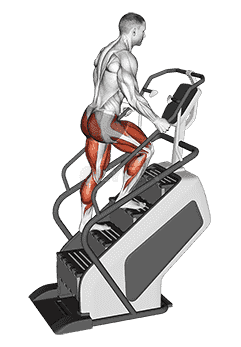
Walking on Stepmill demonstration
_Thighs_small.png&w=3840&q=75)
Performing the: A Step-by-Step Tutorial Walking on Stepmill
- Position yourself so that your body is upright, not leaning into the handles, to help engage your core and improve balance.
- Start the exercise by stepping one foot at a time onto the rotating stairs, mimicking a natural walking motion.
- Maintain a steady pace, ensuring that your feet are fully on the steps and your knees are slightly bent as you step.
- Continue this motion for the duration of your workout, remembering to breathe evenly and to keep your body engaged.
Tips for Performing Walking on Stepmill
- **Adjust the Speed Appropriately**: Don't start with a too high speed. Begin at a slower pace until you get the hang of it, then gradually increase the speed. Going too fast too soon can lead to loss of control and potential injury.
- **Use Your Whole Foot**: When stepping, make sure to place your entire foot on the step, not just the balls of your feet. This allows for better balance, reduces strain on your calves and ankles, and ensures a more effective workout.
- **Don't Skip Steps**: A common mistake is to skip steps in an attempt to make the workout easier. However, this can
Can beginners do the Walking on Stepmill?
Yes, beginners can certainly do the Walking on Stepmill exercise. However, it's important to start slowly and gradually increase the intensity and duration as your fitness level improves. Always ensure proper form to avoid injury and don't hesitate to ask for guidance from a fitness professional if needed.
What are common variations of the Walking on Stepmill?
- Sideways Walking on Stepmill: This variation involves turning to the side and stepping up sideways, which can help engage different muscle groups.
- Walking on Stepmill with Weights: Holding dumbbells or wearing a weighted vest while walking on the stepmill can increase the intensity and help build strength.
- Walking on Stepmill with Intervals: This involves alternating between high-intensity and low-intensity periods, which can help improve cardiovascular fitness.
- Walking on Stepmill Backwards: This variation involves turning around and walking backwards up the steps, which can engage different muscles and challenge your balance.