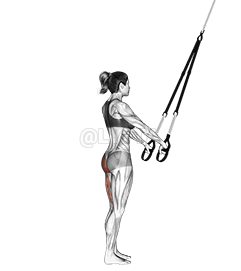
Suspension Hip Hinge
Suspension Hip Hinge demonstration
Watch the demo so setup and tempo are clear before you follow the step-by-step cues.
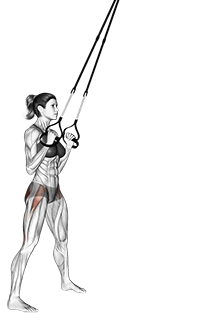
Performing the: A Step-by-Step Tutorial Suspension Hip Hinge
Work through the cues in order so setup, bracing, and reps stay consistent before you add load.
- Position your feet hip-width apart, then push your hips back while keeping your back straight and bending slightly at the knees.
- Lower your torso until it is almost parallel to the ground, keeping your arms straight and aligned with your ears, and ensuring that the suspension trainer remains taut.
- Hold this position for a moment, feeling the stretch in your hamstrings and glutes.
- Finally, return to the starting position by pushing your hips forward and standing up straight, maintaining a tight grip on the suspension trainer handles throughout the movement.
Tips for Performing Suspension Hip Hinge
Form reminders that keep range of motion and control in check once the basic pattern feels stable.
- Proper Foot Position: Make sure your feet are hip-width apart and firmly planted on the ground. This will provide you with a stable base and help you maintain balance during the exercise. Avoid positioning your feet too close together or too far apart.
- Controlled Movements: The Suspension Hip Hinge is not about speed, but control. Make sure to perform each movement slowly and deliberately, focusing on the muscles you're working. Avoid using momentum to swing your body back and forth, as this can result in a loss of control and potential injury.
- Use of Arms: While your arms are holding the suspension straps, avoid pulling on them or using them to help you lift your body. The focus should be
Can beginners do the Suspension Hip Hinge?
A short framing note on whether this pattern suits newer lifters before you load it heavily.
Yes, beginners can do the Suspension Hip Hinge exercise. However, it's important to start with a light resistance to ensure proper form and avoid injury. As with any exercise, it's recommended to get guidance from a fitness professional to ensure the exercise is being performed correctly.
What are common variations of the Suspension Hip Hinge?
Compare these progressions when the main pattern is solid or you need a different stimulus with similar equipment.
- Suspension Hip Hinge with a Twist: Adding a rotational movement to the standard hip hinge can help to engage the core and oblique muscles more intensely.
- Suspension Hip Hinge with a Row: Combining a row movement with the hip hinge can help to engage the back muscles, improving overall strength and stability.
- Suspension Hip Hinge with a Jump: Adding a jump at the end of the hinge movement can increase cardiovascular intensity and improve explosive power.
- Suspension Hip Hinge with a Kickback: Adding a kickback can intensify the workout and engage the glutes and hamstrings more effectively.
Related Exercises
Similar library demos that share muscle or equipment focus so you can compare form cues and programming options.