Suspension Chest Press
Suspension Chest Press demonstration
Watch the demo so setup and tempo are clear before you follow the step-by-step cues.
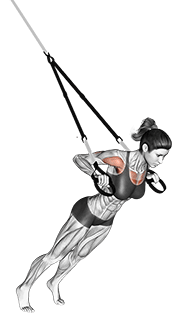
Performing the: A Step-by-Step Tutorial Suspension Chest Press
Work through the cues in order so setup, bracing, and reps stay consistent before you add load.
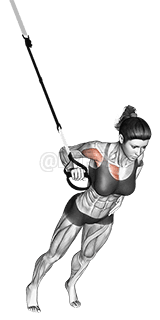
- Walk forward until there is tension in the straps, then lean forward so your body is at a slight angle, keeping your feet hip-width apart and your core engaged.
- Extend your arms out in front of you at chest height, ensuring that your wrists, elbows, and shoulders are all in line.
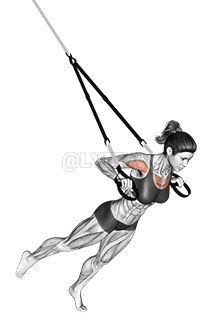
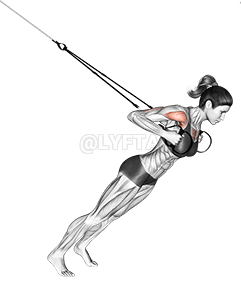
- Lower your body towards the floor by bending your elbows and allowing them to flare out to the side, keeping your body straight and your core engaged.
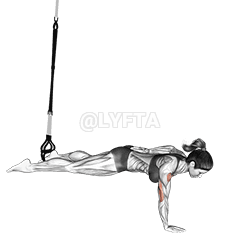
- Push yourself back up to the starting position by extending your arms fully, making sure to keep your body in a straight line from your head to your heels. Repeat this for the desired number of repetitions.
Tips for Performing Suspension Chest Press
Form reminders that keep range of motion and control in check once the basic pattern feels stable.
- **Controlled Movement**: Another common mistake is rushing through the exercise. The Suspension Chest Press should be performed in a slow, controlled manner. Lower your body towards the ground until your chest is just above the ground, then push back up to the starting position. Fast, jerky movements can lead to muscle strain and won't give you the full benefits of the exercise.
- **Correct Hand Position**: Your hands should be positioned slightly wider than shoulder-width apart on the suspension straps. This ensures that you're targeting the correct muscles and reduces the risk of shoulder injuries. Avoid gripping the handles too tightly as this can lead to wrist and
Can beginners do the Suspension Chest Press?
A short framing note on whether this pattern suits newer lifters before you load it heavily.
Yes, beginners can do the Suspension Chest Press exercise. However, it's important to start with lighter resistance and focus on proper form to avoid injury. It's also beneficial to have a fitness trainer or an experienced individual supervise initially to ensure the exercise is being done correctly. As with any new exercise, beginners should start slow and gradually increase intensity as their strength and confidence grows.
What are common variations of the Suspension Chest Press?
Compare these progressions when the main pattern is solid or you need a different stimulus with similar equipment.
- Incline Suspension Chest Press: This variation is done by adjusting the angle of the suspension trainer to target the upper chest muscles.
- Decline Suspension Chest Press: In this variation, the angle is adjusted to target the lower chest muscles.
- Suspension Chest Fly: This variation involves moving the arms in a fly motion rather than a press, which can help to target the chest muscles from a different angle.
- Suspension Chest Press with Rotation: This involves twisting the torso during the press movement to engage the oblique muscles as well as the chest.
Related Exercises
Similar library demos that share muscle or equipment focus so you can compare form cues and programming options.