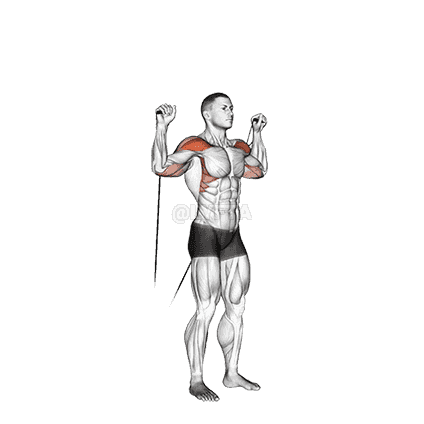
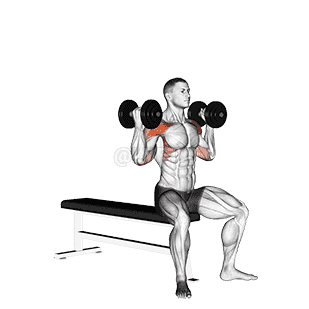
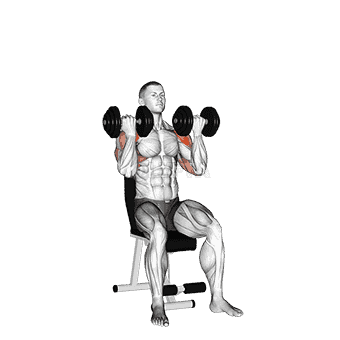
Shoulder Press
Shoulder Press demonstration
Performing the: A Step-by-Step Tutorial Shoulder Press
- Raise the weights above the head in a controlled motion while exhaling, pause for a second when the arms are fully extended.
- Slowly lower the dumbbells back to the starting position at your shoulders while inhaling.
- Make sure to keep your back straight and avoid using your legs or torso to lift the weights; your shoulders and arms should be doing all the work.
- Repeat this process for the desired number of repetitions, ensuring to maintain proper form throughout.
Tips for Performing Shoulder Press
- Avoid Locking Elbows: A common mistake to avoid is locking your elbows at the top of the lift. This can put unnecessary stress on your elbow joints and potentially lead to injury. Instead, try to keep a slight bend in your elbows at the top of the movement.
- Controlled Movements: It's important to perform the shoulder press with controlled movements. Avoid using momentum to lift the weights, as this can lead to improper form and potential injury. Instead, lift and lower the weights in a slow and controlled manner.
- Don't Use Excessive Weight: Another common mistake is using too much weight. This can lead to poor form
Can beginners do the Shoulder Press?
Yes, beginners can do the Shoulder Press exercise. However, it's important to start with light weights to ensure proper form and avoid injury. It's also beneficial to have a trainer or experienced person guide you through the exercise initially to ensure you're doing it correctly. As with any exercise, it's important to warm up properly beforehand and to gradually increase the weight as your strength improves.
What are common variations of the Shoulder Press?
- The Seated Shoulder Press is performed while sitting down, which provides more support for your back and allows you to focus solely on your shoulder and arm muscles.
- The Arnold Press, named after Arnold Schwarzenegger, involves starting the press with your palms facing your body and rotating your wrists as you lift the weights.
- The Behind-the-Neck Shoulder Press is a more challenging variation where the barbell is lowered behind the head instead of in front, which can target different parts of the shoulder muscles.
- The Single-Arm Shoulder Press involves pressing a weight with one arm at a time, which can help identify and correct any imbalances in strength.