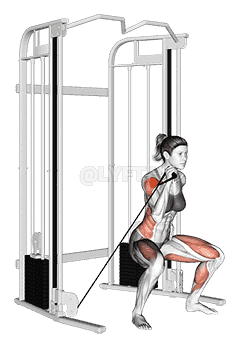
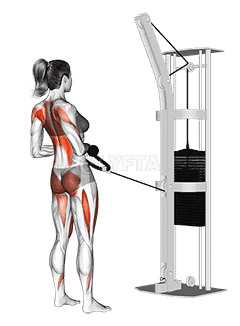
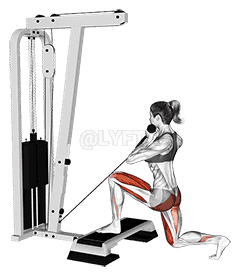
Resistance Band Cable Squat
Resistance Band Cable Squat demonstration
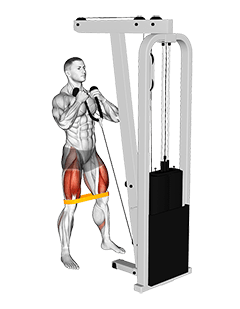
Performing the: A Step-by-Step Tutorial Resistance Band Cable Squat
- Stand up straight, keeping your hands by your shoulders, with your palms facing forward, as if you are holding a barbell for a squat.
- Slowly lower your body into a squat position, bending at the knees and pushing your hips back as if you're sitting on a chair, while keeping your chest upright and your knees over your toes.
- Hold the squat position briefly, then push through your heels to return to the starting position, keeping the resistance band taut throughout the movement.
- Repeat this exercise for your desired number of repetitions, maintaining proper form and control throughout each movement.
Tips for Performing Resistance Band Cable Squat
- Control Your Motion: As you squat, make sure to push your hips back and bend your knees while maintaining a straight back. Lower yourself until your thighs are parallel to the floor, or as far as your flexibility allows. Avoid the common mistake of bending too far forward, which can strain your back.
- Keep Your Knees Aligned: Another common mistake is letting your knees cave inwards or push out too far. Your knees should stay in line with your feet throughout the squat. This will help to protect your knees from injury and ensure that the exercise is targeting the right muscles.
- Slow and Steady Movement: It’s important to control your movement during both the lowering and lifting phases of the squat. Avoid the
Can beginners do the Resistance Band Cable Squat?
Yes, beginners can definitely do the Resistance Band Cable Squat exercise. This exercise is actually great for beginners because it allows them to focus on their form and build strength in their lower body. The resistance band provides a level of resistance that can be adjusted according to the user's comfort and fitness level. However, as with any new exercise, beginners should start with light resistance and gradually increase it as they become stronger, and always make sure to use the correct form to avoid injury.
What are common variations of the Resistance Band Cable Squat?
- Lateral Band Walk Squat: This involves stepping side to side with the band around your ankles or thighs before performing a squat, which targets the glutes and outer thighs.
- Resistance Band Split Squat: This variation involves standing on the band with one foot and stepping the other foot back into a lunge position, then performing a squat.
- Resistance Band Squat with Bicep Curl: In this version, you perform a bicep curl with the resistance band every time you stand up from your squat, working both your lower and upper body.
- Resistance Band Squat Pulse: This involves holding the squat position and performing small up and down movements, which increases the intensity of the workout.