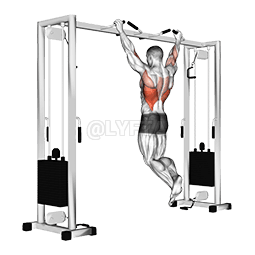
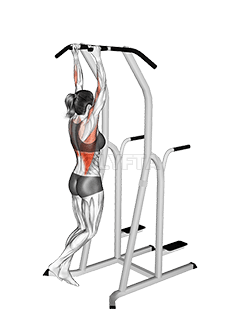
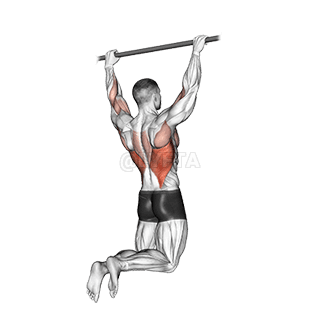
Pull up
Pull up demonstration
Watch the demo so setup and tempo are clear before you follow the step-by-step cues.
Performing the: A Step-by-Step Tutorial Pull up
Work through the cues in order so setup, bracing, and reps stay consistent before you add load.
- With a firm grip on the bar, pull your shoulder blades down and back, bend your legs at the knees if necessary, and cross your ankles.
- Engage your core and pull your body up until your chin is above the bar while keeping your elbows close to your body.
- Hold this position for a moment, ensuring your chest is close or touching the bar.
- Slowly lower your body back down to the starting position, fully extending your arms and maintaining control throughout the movement.
Tips for Performing Pull up
Form reminders that keep range of motion and control in check once the basic pattern feels stable.
- **Avoid Using Momentum:** A common mistake is using momentum to pull yourself up. This can lead to injury and doesn't engage your muscles as effectively as a controlled, steady movement. Instead of swinging or kicking your legs, focus on using your upper body strength to lift yourself.
- **Engage Your Core:** Engaging your core muscles is crucial for maintaining stability during the pull-up. This will also help prevent unnecessary swinging and will ensure your body rises in a controlled manner.
- **Full Range of Motion:** To get the most out of the exercise, make sure you're using a full
Can beginners do the Pull up?
A short framing note on whether this pattern suits newer lifters before you load it heavily.
Yes, beginners can do the pull-up exercise, but it might be challenging as it requires significant upper body strength. If a beginner finds it difficult, they can start with assisted pull-ups using a resistance band or a pull-up assist machine. Another alternative is to start with easier exercises like push-ups and planks to build up their upper body strength before moving on to pull-ups. It's always important to remember to start slow, maintain proper form, and gradually increase intensity to prevent injuries.
What are common variations of the Pull up?
Compare these progressions when the main pattern is solid or you need a different stimulus with similar equipment.
- Wide-grip Pull-ups: In this variation, the hands are placed further apart than the shoulders to emphasize the back muscles.
- Close-grip Pull-ups: This version requires the hands to be closer together, targeting the lower lats and biceps.
- Commando Pull-ups: This involves gripping the bar with hands close together and alternating sides, which engages the core more.
- Negative Pull-ups: This variation focuses on the lowering phase of the movement, helping to build strength when a full pull-up is too challenging.
Related Exercises
Similar library demos that share muscle or equipment focus so you can compare form cues and programming options.