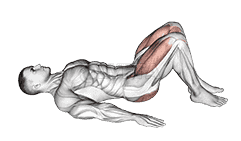
Pelvic Tilt
Pelvic Tilt demonstration
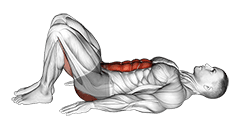
Performing the: A Step-by-Step Tutorial Pelvic Tilt
- Place your hands either by your sides or supporting your head, whichever is more comfortable for you.
- Take a deep breath and as you exhale, gently engage your abdominal muscles, pulling your belly button towards your spine and pushing your lower back into the floor.
- Hold this position for a few seconds while continuing to breathe normally.
- Slowly release the tilt and return to your starting position, repeating this exercise for your desired number of repetitions.
Tips for Performing Pelvic Tilt
- Engage Your Core: The key to performing an effective pelvic tilt is to engage your abdominal muscles. This means you should be pulling your belly button towards your spine and tightening your abs. A common mistake is to use your leg or back muscles instead of your core.
- Breathing Technique: Ensure that you are breathing correctly. Inhale to prepare, then exhale as you tilt your pelvis and engage your core. Holding your breath can increase blood pressure and prevent your muscles from working effectively.
- Avoid Overarching: One of the most common mistakes is to overarch the back during the exercise, which can lead to back pain. To avoid this, ensure that your lower back remains in contact with the floor throughout the exercise. 5
Can beginners do the Pelvic Tilt?
Yes, beginners can definitely do the Pelvic Tilt exercise. It's a simple and effective exercise that helps to improve core strength, flexibility, and posture. It can also help reduce lower back pain. However, as with any new exercise, it's important to start slow and ensure correct form to avoid injury. It may be beneficial to have a fitness professional guide you initially.
What are common variations of the Pelvic Tilt?
- The Posterior Pelvic Tilt involves the front of the pelvis rising and the back of the pelvis dropping.
- The Lateral Pelvic Tilt is another variation where one side of the pelvis is higher than the other.
- The Rotational Pelvic Tilt involves the rotation of the pelvis around the vertical axis, causing one hip to move forward and the other to move backward.
- The Active Pelvic Tilt is a variation where the individual consciously controls and adjusts the position of the pelvis, often used in exercises or physical therapy.