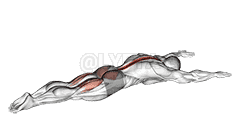
Lying Floor Hyperextension
Lying Floor Hyperextension demonstration

Performing the: A Step-by-Step Tutorial Lying Floor Hyperextension
- Keep your neck in a neutral position by looking straight down at the floor, ensuring not to strain it during the exercise.
- Engage your core and slowly lift your arms, chest, and legs off the floor as high as comfortably possible, making sure to squeeze your glutes and back muscles at the peak of the lift.
- Hold this raised position for a few seconds to maximize the tension in your lower back and glutes.
- Gradually lower your body back to the starting position and repeat the exercise as many times as recommended or until fatigue sets in.
Tips for Performing Lying Floor Hyperextension
- Controlled Movement: When performing the Lying Floor Hyperextension, make sure to lift your upper body using your lower back muscles, not your neck or arms. Keep your movement slow and controlled. Avoid jerking or using momentum to lift your body, as this could lead to back strain or other injuries.
- Breathing Technique: Proper breathing is crucial for this exercise. Inhale as you lower your body to the floor, and exhale as you lift your upper body. This will help you maintain control and stability throughout the exercise.
- Avoid Overextending: A common mistake is to overextend the back by lifting the upper body too high. This can put
Can beginners do the Lying Floor Hyperextension?
Yes, beginners can perform the Lying Floor Hyperextension exercise. It's a lower intensity exercise that primarily targets the lower back muscles, but also works the glutes and hamstrings. As with any new exercise, it's important to start with light weight or no weight at all, focusing on form and technique. If any discomfort or pain is experienced, the exercise should be stopped immediately. It's always a good idea to consult with a fitness professional or physical therapist to ensure the exercise is being performed correctly.
What are common variations of the Lying Floor Hyperextension?
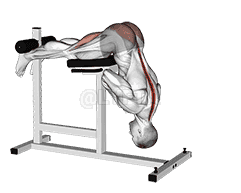
- Roman Chair Hyperextension: In this variation, you use a special piece of gym equipment called a Roman chair that allows you to hang your legs down and focus solely on the hyperextension movement.
- Incline Bench Hyperextension: This variation uses an incline bench to support your body, allowing you to perform the hyperextension at a different angle.
- Banded Hyperextension: This variation adds a resistance band to the movement, increasing the difficulty and targeting your muscles in a different way.
- Weighted Hyperextension: This variation involves holding a weight plate or dumbbell while performing the movement to increase resistance and challenge your muscles further.