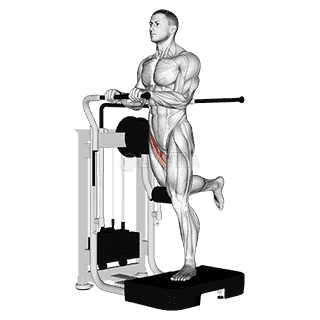
Lever Standing Rear Kick
Lever Standing Rear Kick demonstration
Performing the: A Step-by-Step Tutorial Lever Standing Rear Kick
- Keep your core tight and your back straight, then slowly lift one leg behind you as far as you comfortably can while keeping your leg straight.
- Pause at the top of the movement for a second, making sure to squeeze your glutes.
- Slowly lower your leg back down to the starting position, ensuring that you maintain control throughout the movement.
- Repeat the exercise for your desired number of repetitions, then switch legs and perform the same number of repetitions with the other leg.
Tips for Performing Lever Standing Rear Kick
- Core Engagement: Engage your core throughout the exercise. This not only helps maintain balance but also adds an extra element of workout to your abdominal muscles. Many people forget to engage their core, which can lead to an unstable posture and ineffective workout.
- Controlled Movement: When performing the Lever Standing Rear Kick, the movement should be slow and controlled. Avoid the common mistake of using momentum or swinging the leg back and forth. Instead, focus on squeezing the glute muscles as you extend your leg behind you.
- Appropriate Weight: Start with a lighter weight to ensure you can perform the exercise with correct form. Then, gradually increase the weight as you get stronger. Using a weight that's too
Can beginners do the Lever Standing Rear Kick?
Yes, beginners can perform the Lever Standing Rear Kick exercise. However, it's important to start with a lighter weight to ensure proper form and avoid injury. It's also recommended to have a trainer or experienced person to guide through the process to ensure the exercise is being done correctly. As with any new exercise, beginners should take it slow and listen to their body. If they feel any discomfort or pain, they should stop the exercise and consult with a fitness professional.
What are common variations of the Lever Standing Rear Kick?
- The Resistance Band Rear Kick: In this version, a resistance band is used to add tension, which can be adjusted to fit the user's fitness level.
- The Dumbbell Rear Kick: This variation involves holding a dumbbell in the crook of the knee during the kick to add weight and increase the challenge.
- The Ankle Weight Rear Kick: This version uses ankle weights to add resistance to the kick, strengthening the glutes and hamstrings.
- The Bosu Ball Rear Kick: This variation incorporates a Bosu ball to add an element of balance and stability to the exercise, engaging the core as well as the glutes and hamstrings.