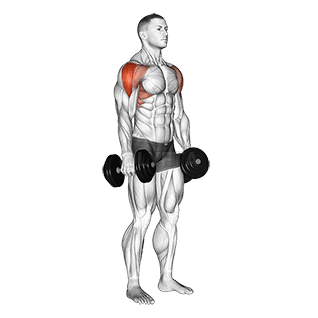
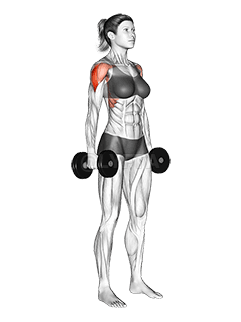
Lateral Raise (Dumbbell)
Lateral Raise demonstration
Performing the: A Step-by-Step Tutorial Lateral Raise
- Keeping your torso stationary, lift the dumbbells to your side with a slight bend on the elbow and the hands slightly tilted forward as if pouring water in a glass. Continue to lift them until they are at shoulder level.
- Pause for a second at the top of the movement, then slowly lower the weights back down to the starting position.
- Repeat this movement for the desired number of repetitions.
- Remember to keep your spine neutral and your movements controlled throughout the exercise, avoiding any swinging or jerking.
Tips for Performing Lateral Raise
- **Avoid Using Momentum**: Avoid using momentum to swing the weights up, as this can lead to injury and reduces the effectiveness of the exercise. Instead, lift and lower the weights in a controlled manner, focusing on the muscles you're trying to work.
- **Choose the Right Weight**: Using too heavy weights can lead to poor form and potential injuries. Start with lighter weights and gradually increase as your strength improves. Remember, the goal is not to lift the heaviest weight, but to perform the exercise correctly and safely.
- **Focus on the Shoulders**: The lateral raise primarily targets the shoulder muscles, specifically the
Can beginners do the Lateral Raise?
Yes, beginners can definitely do the Lateral Raise exercise. However, it's important to start with light weights to avoid injury and to ensure proper form. This exercise primarily targets the shoulder muscles, specifically the lateral or side deltoids. As with any exercise, beginners should take it slow, focus on maintaining correct form, and gradually increase the weight as their strength improves. Consulting with a fitness professional or trainer when starting out can also be beneficial to ensure the exercise is being done correctly.
What are common variations of the Lateral Raise?
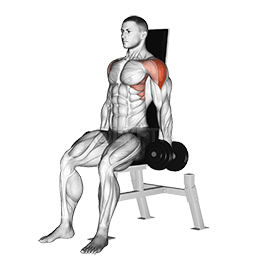
- Seated Lateral Raise: This variation requires you to be seated on a bench, which can help to isolate the shoulder muscles and reduce the ability to use momentum to lift the weights.
- Incline Lateral Raise: In this variation, you lay chest-down on an incline bench, which changes the angle of the movement and targets different parts of the shoulder muscles.
- Bent Over Lateral Raise: This variation involves bending over at the waist and lifting the weights from this position, which targets the rear deltoids rather than the side deltoids.
- One Arm Cable Lateral Raise: This variation involves using a cable machine, which provides a more consistent level of resistance throughout the movement compared to free weights.