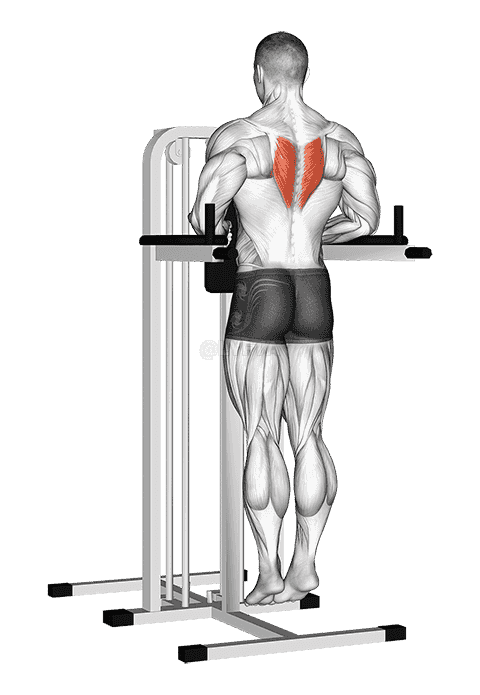
Infraspinatus
Infraspinatus demonstration

Performing the: A Step-by-Step Tutorial Infraspinatus
- Hold a small dumbbell or resistance band in your hand and keep your elbow close to your side throughout the exercise.
- Slowly rotate your forearm away from your body until it's parallel to the floor, focusing on using your shoulder muscles to perform the movement.
- Hold this position for a moment, feeling the contraction in your shoulder, specifically the infraspinatus muscle which is part of the rotator cuff.
- Slowly return your arm to the starting position and repeat the exercise for the desired number of repetitions.
Tips for Performing Infraspinatus
- Controlled Movement: Another common mistake is to rush through the exercise. The movement should be slow and controlled. Avoid jerky movements as they can lead to muscle strain. Start by holding the weight in your hand, slowly rotate your arm outward, hold for a second, and then slowly return to the starting position.
- Appropriate Weight: Using weights that are too heavy is another common error. This can lead to improper form and potential injury. Start with a lighter weight and gradually increase as your strength improves. The focus should be on the muscle contraction and not on the weight being lifted.
Can beginners do the Infraspinatus?
Yes, beginners can do the Infraspinatus exercise, but it's important to start with light weights or resistance and focus on proper form to avoid injury. The Infraspinatus is a small muscle located on the back of the shoulder blade, so it's crucial not to overwork or strain it. It's also recommended to have a trainer or professional guide you through the exercise initially to ensure correct technique.