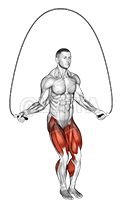
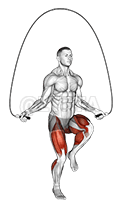
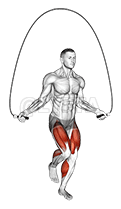
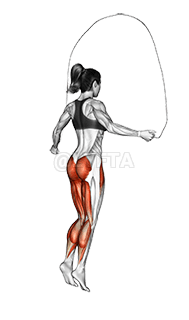
High Jump Rope
High Jump Rope demonstration
Watch the demo so setup and tempo are clear before you follow the step-by-step cues.
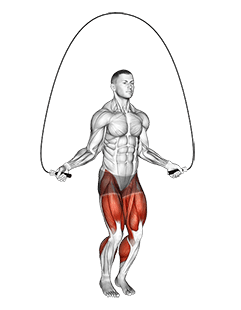
Performing the: A Step-by-Step Tutorial High Jump Rope
Work through the cues in order so setup, bracing, and reps stay consistent before you add load.
- Begin by swinging the rope over your head and as it comes down in front of you, jump over it with both feet, jumping as high as you can.
- As you land, make sure to land softly on the balls of your feet, bending your knees slightly to absorb the impact.
- Immediately after landing, prepare for the next jump by swinging the rope over your head again.
- Repeat this process, maintaining a fast and high jumping rhythm for the duration of your workout.
Tips for Performing High Jump Rope
Form reminders that keep range of motion and control in check once the basic pattern feels stable.
- **Correct Form:** Keep your elbows close to your sides and your hands slightly above waist level. Rotate the rope using your wrists, not your arms. Try to jump just high enough to clear the rope (about 1 inch off the ground) to avoid unnecessary knee strain.
- **Warm-Up:** Before starting the high jump rope, it's essential to do a proper warm-up. This can include light cardio like jogging in place, or dynamic stretches to prepare your muscles and joints for the exercise.
- **Footwear:** Wear supportive athletic shoes to help absorb the impact of jumping. Jumping rope barefoot or in unsupportive shoes can lead to injuries
Can beginners do the High Jump Rope?
A short framing note on whether this pattern suits newer lifters before you load it heavily.
Yes, beginners can do the High Jump Rope exercise. However, it's important to start slow and gradually increase the intensity. Beginners should focus on mastering the basic jump rope technique before trying high jumps. They should also ensure they have the correct rope length and are jumping and landing properly to avoid injury. It's always a good idea to consult with a fitness professional or trainer when starting a new exercise regimen.
What are common variations of the High Jump Rope?
Compare these progressions when the main pattern is solid or you need a different stimulus with similar equipment.
- The Crossed Arms High Jump Rope requires the jumper to cross their arms over their body while the rope is in the air, adding an extra layer of difficulty.
- The Single Leg High Jump Rope involves jumping on one leg while the other is raised, testing balance and coordination.
- The Reverse High Jump Rope involves flipping the direction of the rope swing, requiring the jumper to adapt to a backward motion.
- The Double Dutch High Jump Rope involves two ropes being swung in opposite directions, with the jumper needing to jump high and time their jumps perfectly to avoid getting tangled.
Related Exercises
Similar library demos that share muscle or equipment focus so you can compare form cues and programming options.