Handstand
Handstand demonstration
Watch the demo so setup and tempo are clear before you follow the step-by-step cues.
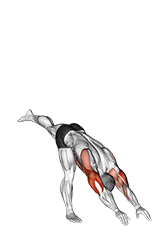
Performing the: A Step-by-Step Tutorial Handstand
Work through the cues in order so setup, bracing, and reps stay consistent before you add load.
- Find a clear, open space against a wall where you can safely practice your handstand, then kneel down and place your hands flat on the floor about shoulder-width apart, fingers spread wide for stability.
- Kick up one foot at a time, using the wall for support, until both of your feet are above your head and your body is in a straight line from your hands to your feet.
- Engage your core and push down through your hands to keep your body steady, remember to keep your gaze on the floor between your hands, not at the wall.
- To come out of the handstand, slowly lower one foot at a time back to the floor, then rest and repeat the exercise as desired.
Tips for Performing Handstand
Form reminders that keep range of motion and control in check once the basic pattern feels stable.
- **Start Against a Wall:** One common mistake is trying to do a freestanding handstand without mastering the basic form against a wall. Start by facing away from the wall, placing your hands on the ground, and slowly walking your feet up the wall until your body is in a straight line. This allows you to focus on your form and build the necessary strength and balance.
- **Hand Positioning:** Place your hands shoulder-width apart with fingers spread wide. This helps distribute your weight evenly across your hands and provides a solid base of support. A common mistake is to clump your fingers together, which can lead to instability.
- **Engage Your Core:** Your core is essential
Can beginners do the Handstand?
A short framing note on whether this pattern suits newer lifters before you load it heavily.
Yes, beginners can certainly start learning how to do a handstand exercise. However, it's important to note that handstands are advanced exercises that require strength, balance, and proper technique. Beginners should start slowly, perhaps by using a wall for support, and gradually work their way up to a full handstand. It's also advisable to have a trainer or spotter for safety reasons when first attempting this exercise. Always prioritize safety and listen to your body to avoid injuries.
What are common variations of the Handstand?
Compare these progressions when the main pattern is solid or you need a different stimulus with similar equipment.
- The Straddle Handstand: In this variation, the legs are spread apart in a straddle position while maintaining the handstand.
- The One-Handed Handstand: This advanced variation involves balancing the entire body on just one hand.
- The Handstand Walk: This variation involves moving or "walking" on the hands while maintaining the handstand position.
- The Pike Handstand: In this variation, the body is bent at the hips, forming a 90-degree angle, while the legs remain straight and together.
Related Exercises
Similar library demos that share muscle or equipment focus so you can compare form cues and programming options.