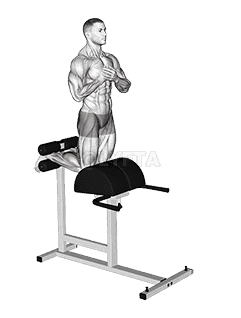
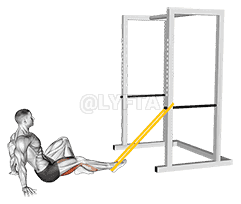
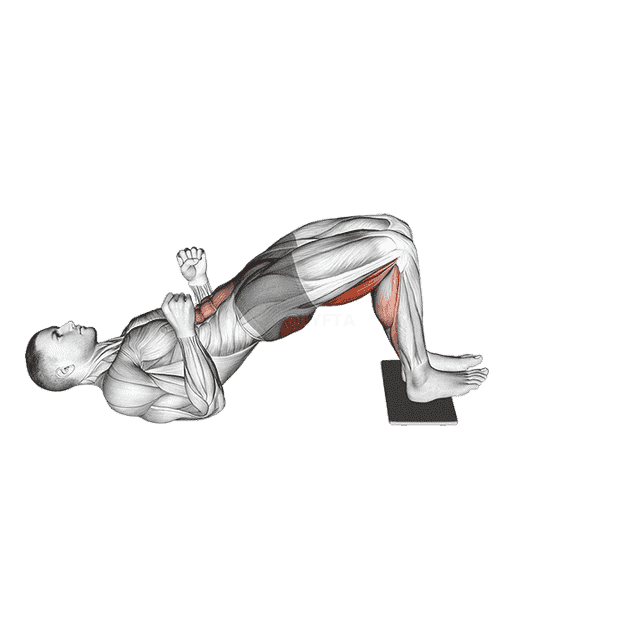
Glute-Ham Raise
Glute-Ham Raise demonstration
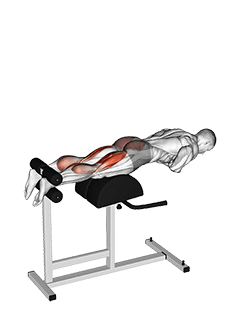
Performing the: A Step-by-Step Tutorial Glute-Ham Raise
- With your body straight, hands crossed on your chest, and eyes looking forward, slowly lower your body forward as far as you can while maintaining control.
- Once you've reached your maximum forward lean, use your hamstrings and glutes to pull your body back up to the starting position.
- Ensure your back remains straight throughout the movement to avoid straining it.
- Repeat this process for the desired amount of repetitions, ensuring that you maintain good form throughout.
Tips for Performing Glute-Ham Raise
- Controlled Movement: Avoid the common mistake of rushing through the exercise. The glute-ham raise should be performed in a slow and controlled manner, using your glutes and hamstrings to lift your torso. This not only reduces the risk of injury but also ensures maximum muscle engagement.
- Maintain Neutral Spine: Another common mistake is arching the back during the exercise. Always aim to maintain a neutral spine throughout the entire movement. This will help to engage the correct muscles and protect your lower back from unnecessary strain.
- Full Range of Motion: To get the most out of the exercise, it's important to use a full range of motion. This means lowering your body all the way down until your torso is parallel with the ground and then raising it
Can beginners do the Glute-Ham Raise?
Yes, beginners can do the Glute-Ham Raise exercise, but it can be quite challenging. This exercise requires significant hamstring strength, so it's important to start slow and use assistance if needed. Some gyms have a machine specifically designed for this exercise, which can be adjusted to accommodate different fitness levels. Alternatively, beginners can modify the exercise by using a resistance band for assistance or by only lowering their body halfway. As always, it's important to maintain proper form to avoid injury.
What are common variations of the Glute-Ham Raise?
- Banded Glute-Ham Raise: By adding resistance bands to the exercise, you can increase the difficulty and further challenge your hamstring and glute muscles.
- Glute-Ham Raise with a Twist: Adding a twist to the traditional glute-ham raise can engage the obliques and other core muscles, enhancing overall stability and strength.
- Weighted Glute-Ham Raise: This variation involves holding a weight against your chest while performing the exercise, adding an extra level of resistance and increasing the challenge.
- Incline Glute-Ham Raise: By adjusting the incline of the bench, you can alter the difficulty of the exercise and target different aspects of the glute and hamstring muscles.