Forearm Wall Slide
Forearm Wall Slide demonstration
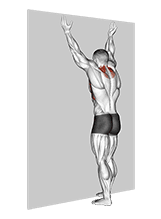
Performing the: A Step-by-Step Tutorial Forearm Wall Slide
- Extend your arms out in front of you at shoulder height, then bend your elbows to a 90-degree angle so that your forearms are parallel to the floor and your palms are facing forward.
- Slowly slide your arms up the wall, keeping your elbows and the back of your hands in contact with the wall the entire time.
- Once your arms are fully extended above your head, slowly slide them back down to the starting position.
- Repeat this motion for a set number of repetitions, ensuring to keep your back flat against the wall throughout the entire exercise.
Tips for Performing Forearm Wall Slide
- Engage Your Core: As with many exercises, engaging your core is crucial. This not only helps maintain your balance but also ensures you're working the right muscles. A common mistake is to forget about the core and focus only on the arm movement. However, the Forearm Wall Slide is a full-body exercise that can help improve overall stability and strength.
- Smooth Movement: Slowly slide your arms up the wall until they are fully extended, then bring them back down to the starting position. The movement should be smooth and controlled, not jerky or rushed.
Can beginners do the Forearm Wall Slide?
Yes, beginners can absolutely do the Forearm Wall Slide exercise. It's a great exercise to improve shoulder mobility and posture. However, like any exercise, it's important to start slow and focus on form to prevent injury. If any discomfort is felt, it's recommended to stop and consult with a fitness professional.
What are common variations of the Forearm Wall Slide?
- Forearm Wall Slide with Resistance Band: This version incorporates a resistance band looped around the wrists to increase the challenge and engage the shoulder and upper back muscles more intensively.
- Single-Arm Forearm Wall Slide: This variation involves performing the exercise with one arm at a time, which can help to isolate and address any imbalances between the sides of the body.
- Forearm Wall Slide with Foam Roller: This version uses a foam roller against the wall to increase the range of motion and add an element of instability to the exercise.
- Forearm Wall Slide with External Rotation: In this variation, you externally rotate your arms at the top of the slide, which helps to further engage the rotator cuff muscles.