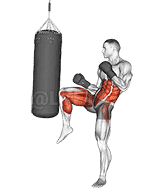
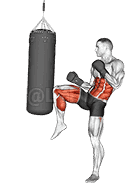
Diagonal Lunge
Diagonal Lunge demonstration

Performing the: A Step-by-Step Tutorial Diagonal Lunge
- Take a big step diagonally forward with your right foot, moving to the right side, while keeping your left foot in place.
- Bend your right knee until it's at a 90-degree angle, making sure your knee doesn't go past your toes, and lower your body into a lunge position.
- Push off your right foot to return to the starting position.
- Repeat the movement with your left foot, stepping diagonally forward to the left side.
Tips for Performing Diagonal Lunge
- Engage Your Core: Engaging your core will help to stabilize your body and maintain your balance throughout the exercise. This can prevent unnecessary strain on your back and help you to perform the lunge more effectively.
- Avoid Leaning Forward: A common mistake is leaning too far forward or to the side during the lunge. This can put undue pressure on your knees and lead to injury. Keep your body upright and your gaze forward to avoid this.
- Controlled Movement: Avoid rushing through the movement. Each step should be deliberate and controlled. This will not only help to prevent injury but will also make the exercise more effective as it forces your muscles to work
Can beginners do the Diagonal Lunge?
Yes, beginners can definitely perform the Diagonal Lunge exercise. It's a great exercise to work the lower body, including the quadriceps, hamstrings, and glutes. However, it's important to start slow and ensure proper form to avoid injury. As with any new exercise, it may be beneficial to have a trainer or experienced individual demonstrate the exercise first. If any pain or discomfort is experienced during the exercise, it should be stopped immediately.
What are common variations of the Diagonal Lunge?
- The Diagonal Lunge with a Twist incorporates a torso twist as you lunge, which helps to engage your core and improve your balance.
- The Diagonal Lunge with Dumbbells adds weight to the exercise, increasing the intensity and engaging your upper body.
- The Diagonal Lunge to High Knee involves lifting your knee towards your chest as you return from the lunge, adding a cardio element and working your hip flexors.
- The Diagonal Lunge with a Side Stretch incorporates a side stretch as you lunge, enhancing flexibility and working your oblique muscles.