Front Snap Kick Kickboxing
Front Snap Kick Kickboxing demonstration
Watch the demo so setup and tempo are clear before you follow the step-by-step cues.

Performing the: A Step-by-Step Tutorial Front Snap Kick Kickboxing
Work through the cues in order so setup, bracing, and reps stay consistent before you add load.
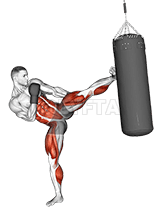
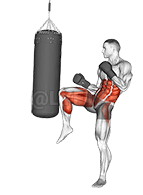
- Lift your right knee up towards your chest, keeping your foot flexed and your toes pointed down.
- Extend your right leg in a swift snapping motion, aiming to hit your target with the ball of your foot.
- Quickly retract your foot back to the knee-up position, ensuring to keep balance and control throughout the movement.
- Return your foot to the ground, resuming your starting stance, and be ready for the next move.
Tips for Performing Front Snap Kick Kickboxing
Form reminders that keep range of motion and control in check once the basic pattern feels stable.
- Hip Rotation: The power of your kick comes from your hips, not your leg. As you kick, rotate your hips forward and snap your leg out in front of you. Avoid the common mistake of just using your leg to kick, as this will result in a weak kick and could potentially lead to injury.
- Point of Contact: The correct point of contact for a front snap kick is the ball of your foot. Curl your toes back to avoid injury. A common mistake is kicking with the toes or the top of the foot, which can lead to sprained or broken toes.
- Control and Precision
Can beginners do the Front Snap Kick Kickboxing?
A short framing note on whether this pattern suits newer lifters before you load it heavily.
Yes, beginners can certainly do the Front Snap Kick in Kickboxing. It's one of the basic kicks and is often taught early on in training. However, it's important to learn and practice the correct technique to avoid injury. It's recommended to start learning under the guidance of a skilled instructor.
What are common variations of the Front Snap Kick Kickboxing?
Compare these progressions when the main pattern is solid or you need a different stimulus with similar equipment.
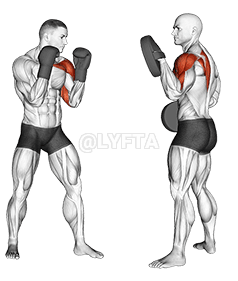
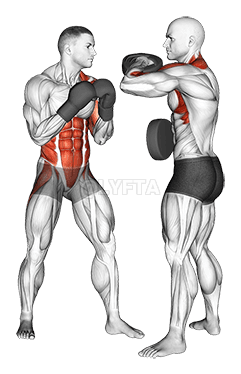
- The Side Kick is another variation where the kickboxer turns their body sideways, lifting their knee and extending their leg to strike the opponent.
- The Push Kick, also known as the Teep Kick, is a variation where the kickboxer uses the ball of the foot to push the opponent away, often used for creating distance.
- The Low Kick is a variation that targets the opponent's lower body, particularly the thighs, to disrupt their balance and mobility.
- The Axe Kick is a high-level variation where the kickboxer lifts their leg as high as possible and brings it down forcefully, aiming to strike the opponent's collarbone or head.
Related Exercises
Similar library demos that share muscle or equipment focus so you can compare form cues and programming options.