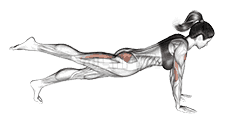
Chest Tap Push-up
Chest Tap Push-up demonstration
_small.png&w=3840&q=75)
Performing the: A Step-by-Step Tutorial Chest Tap Push-up
- Lower your body down in a controlled motion until your chest nearly touches the floor, ensuring your elbows are close to your body and not flaring out.
- As you push your body back up to the starting position, lift one hand off the ground and tap your chest.
- Return your hand quickly to the ground and immediately start your next push-up.
- Alternate the hand you lift after each push-up to ensure an even workout on both sides of your body.
Tips for Performing Chest Tap Push-up
- Controlled Movement: When lowering your body towards the ground, keep your elbow close to your body and control your movement. Avoid dropping down suddenly. When you push back up, tap your chest with one hand. This should be a controlled tap, not a slap, to avoid losing balance.
- Engage Core: Keep your core engaged throughout the exercise. This not only helps in maintaining balance but also adds an extra element of strength training to the exercise.
- Breathing: Breath control is important in any exercise. Inhale as you lower your body and exhale as you push up and
Can beginners do the Chest Tap Push-up?
Yes, beginners can attempt the Chest Tap Push-up exercise, but it's important to note that it is a more advanced move. It requires a good amount of upper body strength, core stability, and coordination. If you're a beginner, you might want to start with regular push-ups or modified push-ups (like knee push-ups or wall push-ups) to build up your strength and form before attempting chest tap push-ups. Always listen to your body and don't push yourself to the point of injury. It might be a good idea to have a personal trainer or fitness professional guide you through the exercise the first few times to ensure you're doing it correctly.
What are common variations of the Chest Tap Push-up?
- Spiderman Push-Up: While lowering your body during the push-up, you bring one knee up to the elbow on the same side, engaging your obliques and hip flexors.
- Decline Push-Up: This variation involves placing your feet on an elevated surface, like a bench or step, which increases the difficulty and targets your upper chest and shoulders more.
- Diamond Push-Up: In this version, you place your hands close together under your chest, forming a diamond shape with your fingers, which places more emphasis on your triceps.
- Plyometric Push-Up: This explosive variation involves pushing your body up with enough force to lift your hands off the ground, increasing the intensity and working on your power.