Cable Lateral Lunge
Cable Lateral Lunge demonstration
_Thighs_small.png&w=3840&q=75)
Performing the: A Step-by-Step Tutorial Cable Lateral Lunge
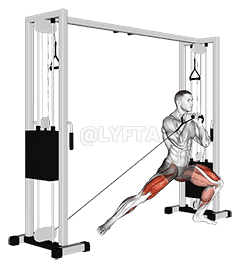
- Step out to the left side with your left foot, bending your left knee and lunging until your thigh is parallel to the floor, while keeping your right leg straight and maintaining the cable handle at your chest level.
- As you lunge, push your hips back and keep your chest up, ensuring that your left knee doesn't go over your toes.
- Push off your left foot to return to the starting position, pulling the cable handle back to the center of your chest.
- Repeat the exercise for the desired number of reps, then switch sides and repeat the exercise with your right leg.
Tips for Performing Cable Lateral Lunge
- Right Weight: Choose the right weight that suits your fitness level. Starting with a weight that's too heavy can lead to muscle strain and poor form. Gradually increase the weight as your strength improves.
- Controlled Movement: The key to an effective Cable Lateral Lunge is a slow, controlled movement. Avoid rushing through the exercise as it can lead to improper form and potential injuries. As you step to the side, make sure to keep your toes pointed forward and lower your body by flexing the knee and hip of your leading leg.
- Depth of the Lunge: Make sure you're going deep enough on your lunges. A common mistake is not lunging deep enough, which can limit the effectiveness of the
Can beginners do the Cable Lateral Lunge?
Yes, beginners can do the Cable Lateral Lunge exercise. However, it's important to start with a lighter weight to ensure proper form and prevent injury. It's also recommended to have a trainer or experienced individual demonstrate the exercise first to ensure it's being done correctly. As with any exercise, it's important to listen to your body and not push beyond your limits.
What are common variations of the Cable Lateral Lunge?
- Bodyweight Lateral Lunge: This is a simpler version where no equipment is used, making it ideal for beginners or for those looking to focus on their form.
- Kettlebell Lateral Lunge: Similar to the dumbbell version, this variation involves holding a kettlebell in front of your chest while performing the lateral lunge, providing a different type of resistance.
- Sliding Lateral Lunge: This version uses a sliding disc or towel under one foot, which adds an element of instability and challenges your balance and coordination.
- Banded Lateral Lunge: In this variation, a resistance band is placed around the thighs to increase the difficulty of the lateral lunge and further engage the glute and hip muscles.