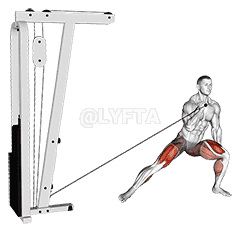
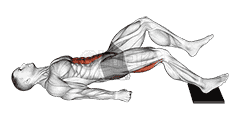
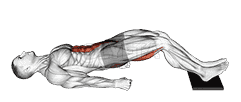
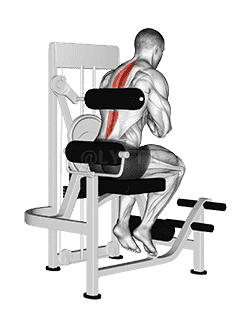
Cable Lateral Lunge
Cable Lateral Lunge demonstration
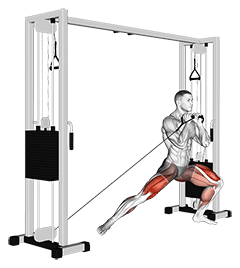
Performing the: A Step-by-Step Tutorial Cable Lateral Lunge
- Set the cable at the lowest position, and hold the handle with both hands in front of your chest, keeping your arms extended.
- Slowly step out to the side away from the machine, bending your outer knee into a lunge, while keeping your other leg straight and your toes pointed forward.
- As you lunge, let the cable pull your arms and upper body towards the machine, maintaining control and resisting the pull as much as possible.
- Push off your bent leg to return to the starting position, pulling the cable back to the center of your body, and repeat the exercise for the desired number of reps before switching sides.
Tips for Performing Cable Lateral Lunge
- **Controlled Movements**: Don't rush the exercise. The key to getting the most out of the Cable Lateral Lunge is to perform each movement slowly and deliberately. This will help target the right muscles and reduce the risk of injury.
- **Proper Foot Positioning**: Ensure your feet are positioned correctly. When you step to the side for the lunge, your foot should be parallel to the cable machine. Incorrect foot positioning can lead to imbalances and injuries.
- **Appropriate Weight**: Start with a lower weight to get your form right, then gradually increase as you get stronger. Using too much weight too soon can lead to poor form and
Can beginners do the Cable Lateral Lunge?
Yes, beginners can certainly do the Cable Lateral Lunge exercise. However, it's important to start with a light weight to ensure proper form and prevent injury. It's also recommended to have a fitness professional or trainer guide you through the exercise initially to make sure you are doing it correctly. Always remember to warm up before starting any exercise routine.
What are common variations of the Cable Lateral Lunge?
- Barbell Lateral Lunge: In this variation, you place a barbell across your shoulders and perform the lateral lunge, making it more challenging for your core and upper body.
- Kettlebell Lateral Lunge: This involves holding a kettlebell in front of your chest with both hands while performing the lateral lunge, which can help improve balance and coordination.
- Bodyweight Lateral Lunge: This is the most basic variation where no equipment is used, making it suitable for beginners or those who want to focus on form and flexibility.
- Slider Lateral Lunge: This variation involves placing your foot on a slider or gliding disc, which increases the challenge to your stability and control during the movement.