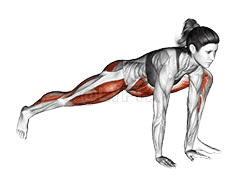
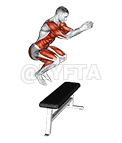
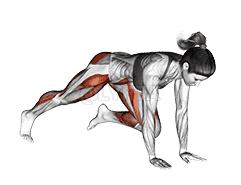
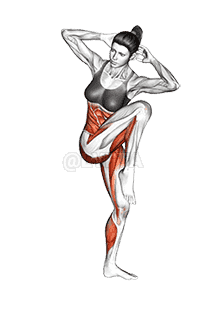
Bear Crawl
Bear Crawl demonstration
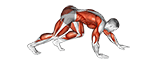
Performing the: A Step-by-Step Tutorial Bear Crawl
- Begin to move forward by taking a small step with your right hand and left foot at the same time, keeping your hips low.
- Follow by taking a step with your left hand and right foot, maintaining a steady pace and keeping your back flat and abs engaged.
- Continue this pattern of opposite hand and foot steps, moving forward for a set distance or time.
- To finish, slowly lower your knees back to the ground and take a moment to stretch out your arms and legs.
Tips for Performing Bear Crawl
- **Engage Your Core**: Engaging your core is crucial for this exercise. This means pulling your belly button towards your spine and keeping your abs tight. A common mistake is to let the belly sag towards the floor, which can put unnecessary pressure on your lower back.
- **Move Opposite Limbs Together**: Move your right hand and left foot forward at the same time, then your left hand and right foot. This cross-body movement is key to the bear crawl, but people often move same-side limbs together, which is less effective and can throw off your balance.
- **Maintain a Slow, Controlled Pace**: Don't rush through the movement
Can beginners do the Bear Crawl?
Yes, beginners can do the Bear Crawl exercise. It's a full body workout that improves strength, flexibility, and stability. However, it's important to start slow and focus on maintaining proper form to avoid injury. It might be challenging at first, but with regular practice, it can become easier. If any discomfort or pain is experienced, it's recommended to stop and consult with a fitness professional or a healthcare provider.
What are common variations of the Bear Crawl?
- Bear Crawl with Push-ups: Add a push-up every few steps to increase the intensity and work your chest and arms more.
- Lateral Bear Crawl: Instead of moving forward, you move sideways, which targets your obliques and challenges your coordination.
- Bear Crawl with Leg Lift: While in the bear crawl position, lift one leg off the ground and hold for a few seconds to engage your glutes and lower back.
- Bear Crawl with Shoulder Taps: This variation involves tapping your opposite shoulder with your hand while maintaining the bear crawl position, increasing the difficulty and improving your balance and stability.