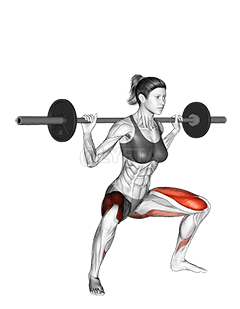
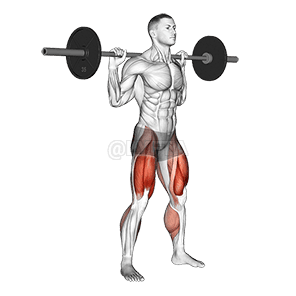
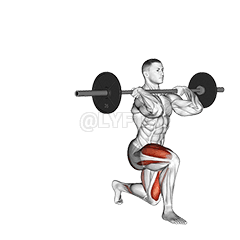
Barbell Squat - Knees - End position
Barbell Squat - Knees - End position demonstration
Watch the demo so setup and tempo are clear before you follow the step-by-step cues.

Performing the: A Step-by-Step Tutorial Barbell Squat - Knees - End position
Work through the cues in order so setup, bracing, and reps stay consistent before you add load.
- Keeping your chest up and your back straight, bend your knees and lower your body as if you're sitting back into a chair until your thighs are parallel to the floor.
- Ensure your knees are in line with your feet and do not extend past your toes.
- Now, push through your heels and extend your legs to return to the starting position.
- Keep your core engaged throughout the exercise and maintain a steady breathing pattern, inhaling as you lower and exhaling as you stand. This is the end position of the Barbell Squat.
Tips for Performing Barbell Squat - Knees - End position
Form reminders that keep range of motion and control in check once the basic pattern feels stable.
- Posture: Maintain a straight back throughout the exercise. Avoid rounding your back or leaning forward, which are common errors that can lead to injury. Engage your core and keep your chest up to help maintain proper posture.
- Barbell Placement: The barbell should rest on your upper back, not your neck. It should be positioned across your shoulder blades. A high bar position (on the traps) or a low bar position (across the rear deltoids) can be used depending on your comfort and the specific muscles you want to target.
- Depth: Go as deep as your flexibility allows, ideally until your hips are
Can beginners do the Barbell Squat - Knees - End position?
A short framing note on whether this pattern suits newer lifters before you load it heavily.
Yes, beginners can definitely do the Barbell Squat exercise. However, it's important to start with a light weight to get the form correct and avoid injury. The end position for a barbell squat should have your knees bent, hips back, and chest up with the weight of the barbell evenly distributed across your shoulders. It's recommended to have a personal trainer or experienced gym-goer guide you through the process for the first few times to ensure you're doing it correctly. Always remember to warm up before starting any exercise routine.
What are common variations of the Barbell Squat - Knees - End position?
Compare these progressions when the main pattern is solid or you need a different stimulus with similar equipment.
- The Sumo Squat - Knees - End Position: In this variation, the barbell is held in the same position as a traditional squat, but the feet are positioned wider apart and the toes are pointed outwards, mimicking a sumo wrestler's stance.
- The Goblet Squat - Knees - End Position: Instead of a barbell, this squat variation uses a single dumbbell or kettlebell held at chest level.
- The Overhead Squat - Knees - End Position: This advanced squat variation involves holding the barbell overhead throughout the entire movement.
- The Zercher Squat - Knees - End Position: In this variation, the barbell is held in the crooks of your elbows, which are bent at 90 degrees.
Related Exercises
Similar library demos that share muscle or equipment focus so you can compare form cues and programming options.