Skip to content

Air Squat

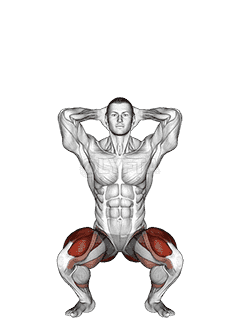
Air Squat demonstration

Air Squat exercise demonstration for Thighs, Body weight

Performing the: A Step-by-Step Tutorial Air Squat

  • Begin the movement by pushing your hips back and bending your knees as if you're about to sit on a chair, while raising your arms out in front of you for balance.
  • Lower your body until your thighs are parallel to the floor, ensuring that your knees are aligned with your toes and not going past them.
  • Pause for a moment at the bottom of the squat, keeping your core engaged and your chest lifted.
  • Push through your heels to return to the starting position, lowering your arms back to your sides.

Tips for Performing Air Squat

  • Depth of Squat: Aim to lower your body until your thighs are at least parallel to the floor. This is the optimal position to engage your glutes and hamstrings. However, don't force yourself into a deeper squat if it causes discomfort or if you're unable to maintain proper form.
  • Engage Your Core: Keep your abs and core muscles engaged throughout the movement. This not only helps you maintain balance and stability, but it also protects your lower back from strain. A common mistake is forgetting to engage the core, which can lead to poor

Can beginners do the Air Squat?

Yes, beginners can definitely do the Air Squat exercise. It is a fundamental movement that is great for beginners to learn as it forms the basis for many other exercises. However, it's important to learn the correct form to avoid injury. It may be helpful for beginners to start with the assistance of a trainer or a fitness professional.

What are common variations of the Air Squat?

  • Goblet Squat: This variation involves holding a weight or kettlebell close to your chest while performing the squat, adding an upper body strength component.
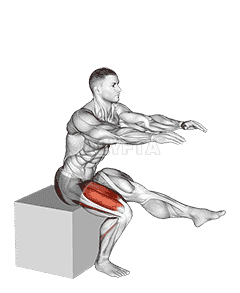
  • Pistol Squat: This is a one-legged variation of the air squat that requires significant balance, flexibility, and strength.
  • Squat Pulse: This variation involves staying in the 'down' position of the squat and making small up and down movements, which increases time under tension for the muscles.
  • Sumo Squat: This variation involves a wider stance and the toes pointed outwards, which targets the inner thighs and glutes more than a traditional air squat.