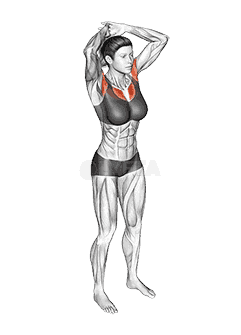
Above Head Chest Stretch
Above Head Chest Stretch demonstration
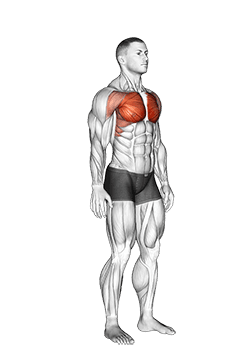
Performing the: A Step-by-Step Tutorial Above Head Chest Stretch
- Slowly raise your arms above your head, keeping your elbows straight and your shoulders down away from your ears.
- Stretch your arms as high as you can, pushing your hands towards the ceiling until you feel a gentle stretch in your chest and shoulders.
- Hold this position for about 20 to 30 seconds, breathing deeply and relaxing into the stretch.
- Lower your arms back to the starting position and repeat the stretch 2-3 times or as comfortable.
Tips for Performing Above Head Chest Stretch
- Controlled Movements: Avoid rushing through the stretch or using jerky movements. Instead, move slowly and steadily, focusing on the muscles you're stretching. This not only reduces the risk of injury, but also makes the exercise more effective.
- Correct Arm Position: Make sure your arms are positioned correctly. They should be extended above your head, but not locked at the elbows. Avoid pushing your arms too far back as it can strain your shoulders.
- Breathing: Don't hold your breath while stretching. Instead, breathe deeply and steadily. Inhale as you extend your arms and exhale as you bring them back down. This helps to increase the effectiveness of the stretch and reduces the risk of dizziness. 5
Can beginners do the Above Head Chest Stretch?
Yes, beginners can definitely do the Above Head Chest Stretch exercise. It is a simple and effective exercise to improve flexibility and relieve tension in the chest and shoulders. However, as with any exercise, it's important to start slowly and gradually increase intensity to prevent injury. If any pain or discomfort is felt, the exercise should be stopped immediately. It may be beneficial for beginners to perform this exercise under the supervision of a trained professional to ensure correct form and technique.
What are common variations of the Above Head Chest Stretch?
- Standing Overhead Chest Stretch with a Resistance Band: In this variation, you stand upright and hold a resistance band with both hands above your head, then gently pull the band apart to stretch your chest.
- Overhead Chest Stretch on a Stability Ball: This variation involves lying face-up on a stability ball with your feet flat on the floor, then extending your arms overhead to stretch your chest.
- Overhead Chest Stretch with a Doorway: This involves standing in a doorway with your arms raised and bent at a 90-degree angle, then leaning forward to stretch the chest.
- Overhead Chest Stretch with a Wall: This variation involves standing with your side to a wall, extending the arm closest to the wall above your head and placing it on