Trap Bar Jump Squat
Trap Bar Jump Squat demonstration
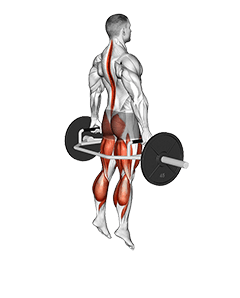
Performing the: A Step-by-Step Tutorial Trap Bar Jump Squat
- Lift the bar by extending your hips and knees to a fully standing position, making sure to keep your back straight and your head up.
- Lower your body back down into a squat position, bending at the knees and pushing your hips back while maintaining a straight back.
- Explode upwards from the squat position, using your leg and core muscles to jump as high as you can while still holding onto the trap bar.
- Land softly with your knees slightly bent to absorb the impact, and immediately lower yourself back into the squat position to prepare for the next repetition.
Tips for Performing Trap Bar Jump Squat
- Correct Form: Bend at the knees and hips to lower yourself into a squat position, keeping your back straight and chest up. This is essential to avoid back injuries. A common mistake is rounding the back, which can lead to serious injury.
- Explosive Movement: The key to a successful trap bar jump squat is the explosive upward movement. Push through your heels and use the power of your legs and hips to jump as high as you can. Remember to land softly with your knees slightly bent to absorb the impact.
- Don't Rush: It's important to take your time with this exercise. Rushing through the motions can lead to improper form and potential injury. Make sure each squat is performed with control and precision.
Can beginners do the Trap Bar Jump Squat?
Yes, beginners can do the Trap Bar Jump Squat exercise, but it's important to start with a light weight to ensure proper form and prevent injury. It's also beneficial to have someone experienced with the exercise, such as a personal trainer, to supervise and provide guidance. This exercise requires a good amount of strength, power, and coordination, so it's crucial to progress gradually and prioritize technique over the amount of weight used.
What are common variations of the Trap Bar Jump Squat?
- Trap Bar Jump Squat with Resistance Bands: The addition of resistance bands increases the tension and difficulty of the exercise, promoting muscle growth and strength.
- Trap Bar Jump Squat with Weighted Vest: Wearing a weighted vest while performing the exercise adds an extra layer of resistance, increasing overall strength and power.
- Plyometric Trap Bar Jump Squat: This variation involves a quick, explosive jump followed by a controlled landing, enhancing power and speed.
- Trap Bar Jump Squat with Pause: This involves a brief pause at the bottom of the squat before the jump, which increases the challenge and helps to improve form and control.