Straight Back Seated Row
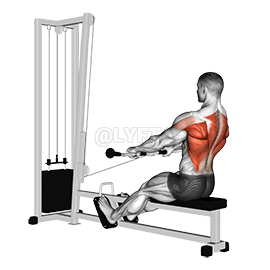
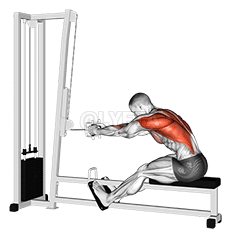
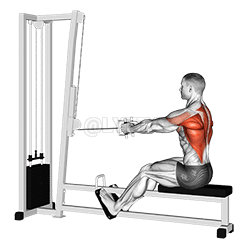
Straight Back Seated Row demonstration
Performing the: A Step-by-Step Tutorial Straight Back Seated Row
- Grasp the handles with an overhand grip and sit upright, keeping your back straight and shoulders down.
- Pull the handles towards your torso while keeping your elbows close to your body and squeezing your shoulder blades together.
- Pause for a moment when the handles are close to your abdomen, then slowly extend your arms back to the starting position.
- Repeat this motion for the desired number of repetitions, ensuring to maintain a straight back and controlled movements throughout the exercise.
Tips for Performing Straight Back Seated Row
- **Controlled Movement**: Another common mistake is performing the exercise too quickly. The straight back seated row should be performed in a controlled manner to maximize the engagement of the targeted muscles. When you pull the weight, do it in a slow and controlled manner, and do the same when you return to the starting position.
- **Avoid Overextending**: Do not overextend or overstretch your arms at the end of the movement. This can lead to shoulder or back injuries. Your arms should be extended fully but not to the point where you feel a strain in your shoulder joints.
- **Correct Grip**: Make sure your grip on the handle is correct. Your palms should face each other. A wrong grip can
Can beginners do the Straight Back Seated Row?
Yes, beginners can do the Straight Back Seated Row exercise. However, it's important to start with a light weight to ensure proper form and prevent injury. As strength and technique improve, the weight can be gradually increased. It's also beneficial to have a trainer or experienced gym-goer supervise initially to make sure the exercise is being done correctly.
What are common variations of the Straight Back Seated Row?
- Inverted Row: Using a barbell rack or Smith machine, you can perform an inverted row, which targets the same muscles but from a different angle.
- Cable Row: This variation uses a cable machine, allowing for a smooth, continuous motion and the ability to adjust the weight easily.
- Bent Over Barbell Row: This exercise is performed while standing and bending over, adding an element of balance and core strength to the workout.
- T-Bar Row: Using a T-bar machine or a barbell with a handle attachment, this variation allows for a wider grip, targeting the upper back and shoulders more intensely.