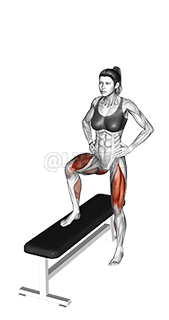
Step-up (Body weight)
Step-up demonstration
Watch the demo so setup and tempo are clear before you follow the step-by-step cues.
Performing the: A Step-by-Step Tutorial Step-up
Work through the cues in order so setup, bracing, and reps stay consistent before you add load.
- Lift your right foot and place it firmly on the step, ensuring your entire foot is on the surface and not hanging off the edge.
- Push through your right heel to lift your body onto the step, bringing your left foot to meet your right foot on the step.
- Slowly lower your left foot back to the ground, followed by your right foot.
- Repeat the exercise for the desired amount of repetitions, then switch to leading with your left foot.
Tips for Performing Step-up
Form reminders that keep range of motion and control in check once the basic pattern feels stable.
- Full Foot on the Step: Another common error is not placing the entire foot on the step. This can lead to instability and potential injury. Make sure to place your whole foot on the step, not just the toes. This will give you a solid base and allow for proper force distribution throughout the exercise.
- Control Your Movement: Avoid rushing through the exercise. It's not a race. Lowering yourself back down in a controlled manner will not only help to prevent injury, but also engage your muscles more effectively, thereby enhancing the benefits of the exercise.
- Engage Your Core: Activating your core
Can beginners do the Step-up?
A short framing note on whether this pattern suits newer lifters before you load it heavily.
Yes, beginners can definitely do the Step-up exercise. It is a simple and effective exercise for lower body strength and stability. It mainly targets the quadriceps, but also works the glutes, hamstrings, and calves. Here's a basic guide on how to do it: 1. Stand in front of a step or bench and place your right foot on the step. 2. Push your body up until your right leg is straight, then lower your body back down. 3. Repeat for the desired number of reps, then switch to your left leg. Remember to start with a lower step or bench if you are a beginner, and gradually increase the height as you get stronger. Also, maintain a slow and controlled motion throughout the exercise to avoid injury. As always, it's a good idea to consult with a fitness professional or physical therapist to make sure you're doing the exercise correctly and safely, especially if you're new to fitness or have any pre-existing health conditions.
What are common variations of the Step-up?
Compare these progressions when the main pattern is solid or you need a different stimulus with similar equipment.
- The Step-Up with Knee Raise adds a knee lift at the top of the step, increasing the intensity and adding an additional balance challenge.
- The Weighted Step-Up involves holding dumbbells or kettlebells in your hands while performing the step-up, adding resistance and increasing the difficulty.
- The Step-Up Jump is a more dynamic variation where you explode upwards from the leading leg and switch legs in the air, landing with the opposite leg on the platform.
- The Step-Up with Overhead Press involves holding a pair of dumbbells at shoulder height and pressing them overhead as you step up, integrating upper body strength into the exercise.
Related Exercises
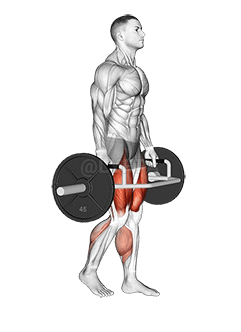
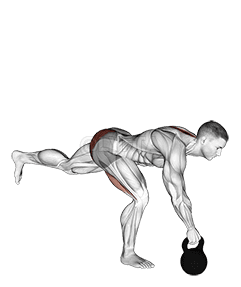
Similar library demos that share muscle or equipment focus so you can compare form cues and programming options.