Step-up (Dumbbell)
Step-up demonstration
Watch the demo so setup and tempo are clear before you follow the step-by-step cues.
Performing the: A Step-by-Step Tutorial Step-up
Work through the cues in order so setup, bracing, and reps stay consistent before you add load.
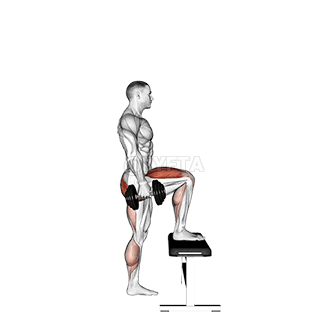
- Step up onto the bench with your right foot, pressing through your right heel as you lift your left foot to meet your right so you are standing on the bench.
- Maintain your balance, keep your body upright and ensure your core is engaged.
- Slowly lower your left foot back down to the ground, followed by your right foot, returning to your original standing position.
- Repeat the exercise by alternating the leading foot each time, ensuring to keep your movements controlled and steady.
Tips for Performing Step-up
Form reminders that keep range of motion and control in check once the basic pattern feels stable.
- Maintain Posture: Keep your chest up and shoulders back throughout the exercise. This will help you maintain balance and prevent hunching, which can lead to back strain or injury. Make sure to engage your core muscles to help maintain this upright posture.
- Control Your Movement: Avoid the temptation to use momentum to propel yourself upwards. Instead, focus on using your leg muscles to drive the movement. This ensures that you're getting the most out of the exercise and not risking injury by losing control.
- Avoid Locking Your Knees: When you step up, make sure not to lock your knee at the top of the movement. Keeping a slight bend in your knee will ensure that the focus remains on your
Can beginners do the Step-up?
A short framing note on whether this pattern suits newer lifters before you load it heavily.
Yes, beginners can do the Step-up exercise. It's a great exercise to start with as it targets the quadriceps, hamstrings, and glutes. It's also a functional exercise, meaning it helps improve balance and coordination. Beginners should start with a low step and gradually increase the height as their strength and balance improve. Remember to maintain proper form to avoid injury. It's also a good idea to have a trainer or workout buddy observe your form when you're first starting out.
What are common variations of the Step-up?
Compare these progressions when the main pattern is solid or you need a different stimulus with similar equipment.
- The Step-up with Knee Raise adds a knee lift at the top of the step-up to engage the core and improve balance.
- The Weighted Step-up incorporates dumbbells or a barbell to increase the resistance and make the exercise more challenging.
- The Plyometric Step-up, also known as the Box Jump, adds a jump at the top of the step-up to increase power and explosiveness.
- The Step-up with Overhead Press includes a shoulder press at the top of the exercise to work the upper body in addition to the lower body.
Related Exercises
Similar library demos that share muscle or equipment focus so you can compare form cues and programming options.