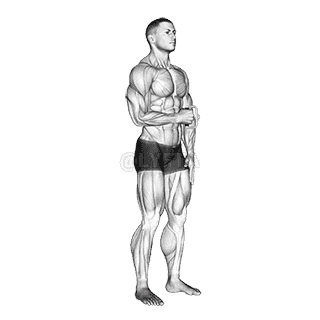
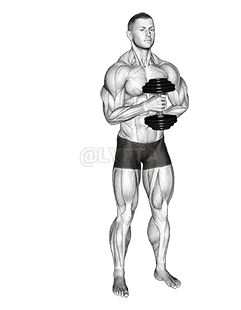
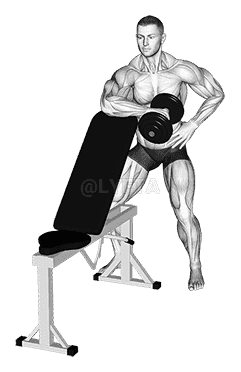
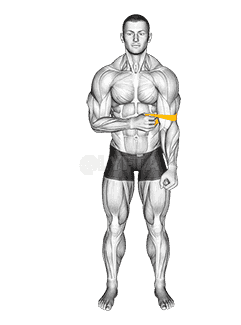
Standing Shoulder External Rotation
Standing Shoulder External Rotation demonstration
Performing the: A Step-by-Step Tutorial Standing Shoulder External Rotation
- Keeping your elbows close to your body, slowly rotate your forearms outward until they are parallel with the floor, maintaining the 90-degree angle at your elbow.
- Hold this position for a moment, ensuring your shoulder muscles are engaged.
- Slowly return your forearms to the starting position, controlling the movement to avoid injury.
- Repeat this exercise for the desired number of repetitions, ensuring to keep your core engaged and your back straight throughout.
Tips for Performing Standing Shoulder External Rotation
- Elbow Position: Your elbow should be kept at a 90-degree angle and tucked into your side throughout the exercise. A common mistake is to allow the elbow to drift away from the body, which can reduce the effectiveness of the exercise and increase the risk of injury.
- Slow and Steady: Perform the rotation slowly and in a controlled manner. Avoid the temptation to rush through the movement or use momentum to swing the weight, as this can result in poor form and potential injury.
- Appropriate Weight: Start with a light weight and gradually increase as your strength improves. Using a weight that is too heavy can lead to improper form and potential injury.
- Regular Breaks: Take regular breaks to
Can beginners do the Standing Shoulder External Rotation?
Yes, beginners can perform the Standing Shoulder External Rotation exercise. It is a relatively simple and safe exercise that helps to strengthen the rotator cuff muscles. However, it's important to start with a light weight and focus on proper form to avoid injury. It's also beneficial to have a personal trainer or physical therapist provide guidance when first starting out.
What are common variations of the Standing Shoulder External Rotation?
- Elastic Band Shoulder External Rotation: This variation involves using an elastic resistance band instead of a dumbbell or weight, which can provide a different type of resistance and help to improve muscular endurance.
- Lying Shoulder External Rotation: This variation involves performing the exercise while lying down, either on your side or on your back, which can help to target different parts of the rotator cuff.
- Cable Machine Shoulder External Rotation: This variation involves using a cable machine, which can provide a more consistent level of resistance throughout the entire range of motion.
- Wall or Doorway Stretch Shoulder External Rotation: This variation involves using a wall or doorway to provide resistance, which can be a gentle way to stretch and strengthen the rotator cuff muscles.