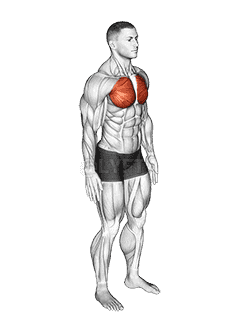
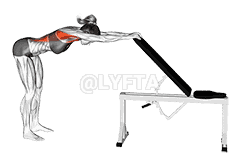
Standing Phelps
Standing Phelps demonstration
_small.png&w=3840&q=75)
Performing the: A Step-by-Step Tutorial Standing Phelps
- Extend your arms straight out in front of you, parallel to the ground, and interlock your fingers with your palms facing outward.
- Start the exercise by raising your arms above your head, keeping your fingers interlocked and your arms as straight as possible.
- Once your arms are fully extended overhead, begin to rotate them backwards in a circular motion, like you're doing a backstroke in swimming.
- Continue this motion for a set number of repetitions or a set amount of time, then lower your arms back to the starting position.
Tips for Performing Standing Phelps
- Avoid Arching Your Back: A common mistake is arching the back while performing this exercise. This not only reduces the effectiveness of the exercise but also puts unnecessary strain on your lower back. To avoid this, engage your core throughout the exercise to keep your spine neutral and stable.
- Don't Rush: The Standing Phelps is not about speed, but about controlled, deliberate movements. Rushing through the exercise can lead to sloppy form and potential injury. Take your time with each circular motion, focusing on the muscles you're working.
- Breathing: Remember to breathe throughout the exercise. It can be easy to hold your breath, especially as you concentrate
Can beginners do the Standing Phelps?
Yes, beginners can do the Standing Phelps exercise. However, as with any new exercise, it is important to start slow and focus on proper form to prevent injury. It may be helpful for beginners to start with a lighter weight and gradually increase as their strength and technique improve. If you're unsure about how to do the exercise correctly, consider seeking advice from a fitness professional.
What are common variations of the Standing Phelps?
- Another variation is the Single Arm Standing Phelps, where you perform the exercise one arm at a time, focusing on unilateral strength and balance.
- The Standing Phelps with Resistance Bands is another alternative, where you use resistance bands instead of dumbbells to add a different type of resistance to the exercise.
- The Standing Phelps with a Twist involves rotating the torso to one side as you lift the weights, adding an element of core engagement and balance to the exercise.
- Lastly, the Standing Phelps with Pulse is a variation where you add a small pulse or bounce at the top of the movement, increasing the intensity and time under tension for the muscles.