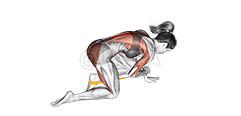
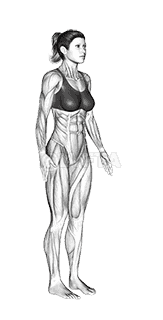
Standing Low Body Rotation
Standing Low Body Rotation demonstration
_small.png&w=3840&q=75)
Performing the: A Step-by-Step Tutorial Standing Low Body Rotation
- Extend your arms out in front of you at chest level, clasping your hands together or holding a light weight.
- Slowly rotate your torso to the right, keeping your hips and legs stationary, and turning only from your waist.
- Hold this position for a couple of seconds, then slowly rotate your torso back to the center.
- Repeat the same movement on the left side, rotating your torso while keeping your hips and legs stationary.
Tips for Performing Standing Low Body Rotation
- **Smooth Rotation**: The rotation should be smooth and controlled, originating from the hips and waist, not the shoulders. A common mistake is to use the upper body to create momentum, which can strain the lower back and reduce the effectiveness of the exercise.
- **Focus on Breathing**: Breathe out when you rotate and breathe in when you return to the starting position. This helps to maintain a steady rhythm and increases the oxygen supply to your muscles, making the exercise more effective.
- **Avoid Over Rotating**: Over rotating can put unnecessary strain on your spine and potentially cause injury. Rotate only as far as your body comfortably allows.
- **Use of Equipment**: If you are using a resistance band or a cable machine,
Can beginners do the Standing Low Body Rotation?
Yes, beginners can do the Standing Low Body Rotation exercise. It's a simple and effective exercise that improves core strength and flexibility. However, it's important for beginners to start with a smaller range of motion and gradually increase as their strength and flexibility improve. They should also ensure they are using proper form to avoid injury. If they experience any pain or discomfort, they should stop the exercise and possibly consult with a fitness professional.
What are common variations of the Standing Low Body Rotation?
- The High Plank Body Rotation: This variation changes the exercise to a high plank position, adding an extra challenge to the core and shoulder stability.
- The Lying Low Body Rotation: This variation is performed lying down on your back, which can be easier for beginners or those with lower back issues.
- The Kneeling Low Body Rotation: This variation is performed from a kneeling position, which can help to engage the glutes and lower back more effectively.
- The Single-Leg Low Body Rotation: This variation adds a balance challenge, as you perform the exercise while standing on one leg.