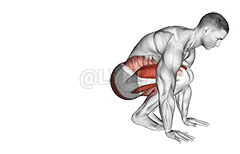
Single Leg Stand
Single Leg Stand demonstration
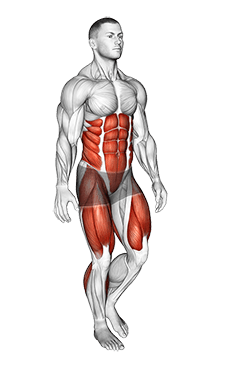
Performing the: A Step-by-Step Tutorial Single Leg Stand
- Slowly raise one foot off the ground, keeping your other foot planted firmly for balance.
- Keep your raised foot close to your ankle or knee, but do not rest it on the standing leg.
- Hold this position for as long as you can maintain good form, ideally aiming for 30 seconds to a minute.
- Lower your foot back to the ground and repeat the exercise with the other leg.
Tips for Performing Single Leg Stand
- **Focus on Balance**: The Single Leg Stand is primarily a balance exercise. To perform it effectively, find a fixed point to focus on, this will help you maintain your balance. Avoid looking around or at moving objects as it can throw off your balance.
- **Maintain Proper Posture**: Stand tall with your shoulders back and your chest out. When lifting your leg, make sure your hips are level and your body is aligned. A common mistake is leaning to one side or letting the hip of the lifted leg drop down.
- **Use Support if Needed**: If you're new to the exercise or have difficulty balancing, use a wall or a chair for support. As your balance improves, you can gradually rely less on the support.
- **Control Your Breathing**: Breathing properly
Can beginners do the Single Leg Stand?
Yes, beginners can do the Single Leg Stand exercise. However, they should start with shorter durations and ensure they have something to hold onto for balance if needed. As their balance and strength improve, they can gradually increase the duration of the stand and eventually perform the exercise without support. It's always important to listen to your body and avoid any movements that cause pain.
What are common variations of the Single Leg Stand?
- Single Leg Stand with Knee Lift: In this variation, you lift the non-standing knee to hip level, increasing the difficulty and engaging the core more.
- Single Leg Stand with Toe Touch: This version requires you to reach down and touch your toe with the opposite hand, testing your balance and flexibility.
- Single Leg Stand with Eyes Closed: By closing your eyes while performing the single leg stand, you remove visual cues and make maintaining balance significantly harder.
- Single Leg Stand on a BOSU Ball: Performing a single leg stand on a BOSU ball or any unstable surface adds an extra level of difficulty and significantly improves balance and core strength.