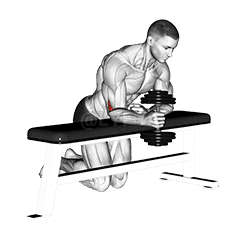
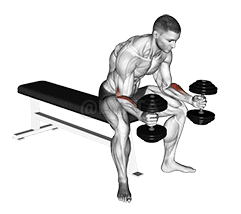
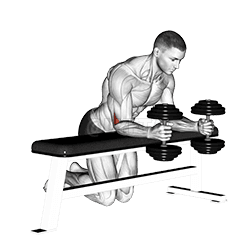
Seated Neutral Wrist Curl
Seated Neutral Wrist Curl demonstration
Watch the demo so setup and tempo are clear before you follow the step-by-step cues.
Performing the: A Step-by-Step Tutorial Seated Neutral Wrist Curl
Work through the cues in order so setup, bracing, and reps stay consistent before you add load.
- Position your forearm on your thigh with the palm of your hand facing upwards, and your wrist hanging over the knee.
- Slowly lower the dumbbell as far as possible, letting your wrist fully extend.
- Then, curl your wrist upwards, lifting the dumbbell as high as you can, while keeping your forearm stationary on your thigh.
- Slowly lower the dumbbell back to the starting position, repeating the movement for your desired number of repetitions before switching to the other hand.
Tips for Performing Seated Neutral Wrist Curl
Form reminders that keep range of motion and control in check once the basic pattern feels stable.
- Right Grip: Hold a dumbbell in each hand with your palms facing upwards. Ensure your grip is firm but not too tight to avoid straining your wrists.
- Controlled Movement: Curl the weights as you exhale, keeping the forearms stationary. The movement should only occur at your wrist. Then, slowly lower the dumbbells back to the initial position as you inhale. The key is to maintain control throughout the exercise, not letting the weight drop or using momentum to lift it.
- Avoid Overloading: One common mistake is using too heavy weights. This can lead to improper form and potential injury. Start with light weights and gradually increase as your strength improves
Can beginners do the Seated Neutral Wrist Curl?
A short framing note on whether this pattern suits newer lifters before you load it heavily.
Yes, beginners can do the Seated Neutral Wrist Curl exercise. It's a relatively simple exercise that targets the forearms and doesn't require a lot of strength or coordination. However, as with any new exercise, it's important to start with light weights and gradually increase as strength improves. It's also crucial to use proper form to avoid injury. If unsure, it's always a good idea to ask for guidance from a fitness professional.
What are common variations of the Seated Neutral Wrist Curl?
Compare these progressions when the main pattern is solid or you need a different stimulus with similar equipment.
- Standing Barbell Wrist Curl: This variation involves standing instead of sitting, which can help to engage more muscles and improve overall strength.
- Reverse Wrist Curl: This variation involves curling the wrists upwards instead of downwards, which can help to strengthen the extensor muscles in the forearm.
- Behind-The-Back Barbell Wrist Curl: This variation involves holding the barbell behind your back, which can help to target different muscles and improve wrist flexibility.
- Seated Wrist Curl Over Bench: This variation involves sitting on a bench and resting your forearms on your thighs, which can help to isolate the forearm muscles and improve wrist strength.
Related Exercises
Similar library demos that share muscle or equipment focus so you can compare form cues and programming options.