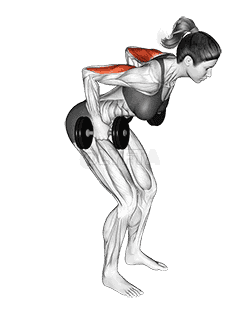
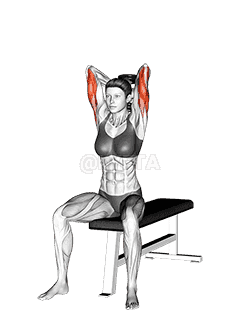
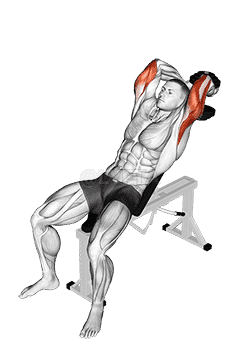
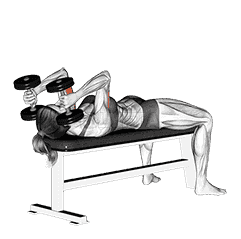
Seated Kickback
Seated Kickback demonstration
Performing the: A Step-by-Step Tutorial Seated Kickback
- Extend your legs out in front of you, keeping your feet together and your toes pointed.
- Engage your core and maintain a straight back as you slowly bend your knees and pull them toward your chest.
- Pause for a moment when your knees are close to your chest, then slowly extend your legs back out in front of you.
- Repeat this exercise for your desired number of repetitions, ensuring to keep your movements slow and controlled to maximize the workout's effectiveness.
Tips for Performing Seated Kickback
- Controlled Movements: Extend one leg back and up, keeping the knee straight, until your foot is at the same height as your glutes. Then, slowly lower your foot back to the ground. Make sure the movements are controlled and not too fast, as this can cause strain on your lower back and does not effectively engage your glute muscles.
- Engage Your Core: While performing the seated kickback, it's important to engage your core muscles. This not only helps to maintain your balance but also enhances the effectiveness of the exercise by involving more muscle groups.
- Avoid Overextending: A common mistake is overextending the leg during the kickback.
Can beginners do the Seated Kickback?
Yes, beginners can do the Seated Kickback exercise. It is a relatively simple exercise that targets the glute muscles. However, like any other exercise, it's important to start with light weight or no weight at all to understand the proper form and avoid injury. It's also beneficial to have a professional or a knowledgeable person, like a personal trainer, guide you through the exercise initially.
What are common variations of the Seated Kickback?
- Seated Bent-Knee Kickback: Instead of extending your leg straight back, you bend your knee and push back, focusing more on your glutes.
- Seated Kickback with Ankle Weights: This variation uses ankle weights to add resistance and make the exercise more challenging.
- Single-leg Seated Kickback: This variation involves performing the exercise with one leg at a time, which can help to address any muscle imbalances.
- Seated Kickback with a Stability Ball: This variation involves placing a stability ball behind your back and against a wall, which adds an element of balance and core strength to the exercise.